Picture this: it’s a Friday night, the lights are low, and you’ve just decided to turn your kitchen into a culinary playground. You’re craving something bright, something that sings with green and gold, and you’ve been eyeing that jar of basil pesto you bought last week. Suddenly, the oven door slams, the fridge door slams, and you realize you’ve forgotten the chicken. That panic turned into a delicious idea: crispy parmesan-coated chicken tossed with pesto pasta, a dish that will make your taste buds do the salsa. I was halfway through a midnight snack, and the next thing I knew, I was on a mission to create the ultimate pesto pasta with crispy parmesan.
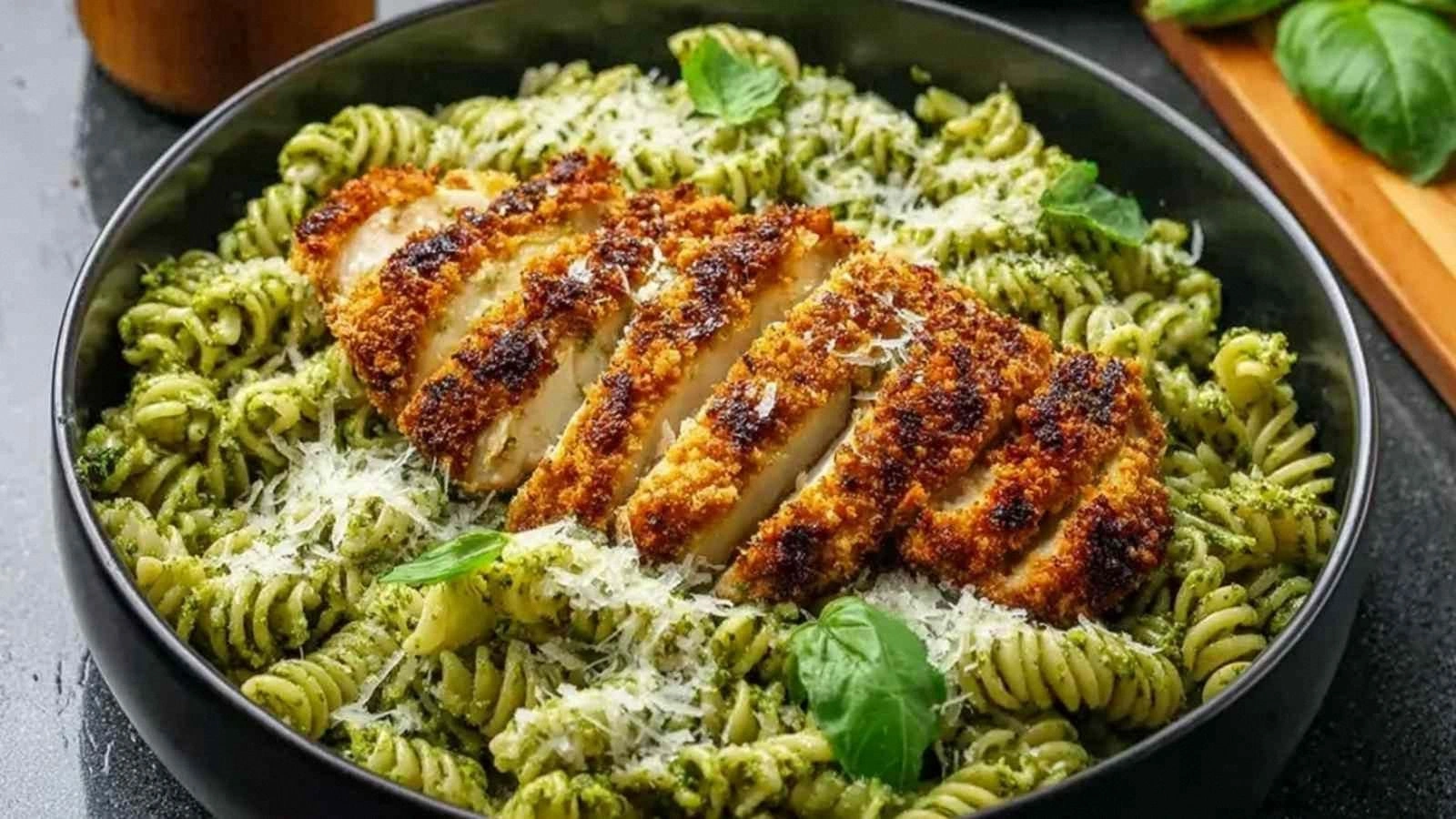
The aroma that filled the kitchen was unmistakable—a sharp, herby scent from the pesto, the subtle nutty perfume of toasted panko, and the faint metallic tang of freshly grated parmesan. The sound was a gentle hiss as the chicken hit the hot pan, followed by a satisfying crackle when the breadcrumbs browned. The sight was a mosaic of golden crusts, glossy green sauce, and bright red cherry tomatoes glistening like jewels. When you bite into that first piece, the crispy edges shatter like thin ice, revealing a tender, juicy chicken core that melts in your mouth. The sauce clings to the pasta like velvet, each strand coated in a burst of basil, garlic, and parmesan, while the tomatoes add a pop of sweet acidity. It’s a symphony of textures and flavors that makes every bite an adventure.
What makes this version stand out is that it’s not just a recipe; it’s a carefully choreographed dance between crispiness and creaminess, between the bright freshness of basil and the comforting depth of parmesan. Most pesto pastas are either too dry or too saucy, but here the balance is razor‑sharp: the chicken is perfectly crisp, the pasta is al dente, and the sauce is just thick enough to cling without overpowering. The addition of panko breadcrumbs gives a delightful crunch that sets it apart from the usual breadcrumb coating. The reserved pasta water is used to create a silky, glossy finish that glides over the noodles. The cherry tomatoes add a juicy burst of color and flavor that cuts through the richness. In short, every element is meticulously chosen to elevate the dish to a new level of deliciousness.
I’ll be honest—when I first tasted this, I ate half the batch before anyone else got to try it. I dare you to taste this and not go back for seconds. That’s the kind of bold claim that only a dish that hits all the right notes can make. Most recipes get this completely wrong. Here’s what actually works: the coating, the sauce, the timing. Picture yourself pulling this out of the oven, the whole kitchen smelling incredible, and watching the golden crust glisten in the light. Let me walk you through every single step—by the end, you’ll wonder how you ever made it any other way.
What Makes This Version Stand Out
- Flavor: The basil pesto is made from fresh basil, garlic, pine nuts, and parmesan, delivering a vibrant, herbaceous kick that’s far superior to store‑bought versions.
- Texture: Crispy panko coating gives the chicken a crunch that shatters like thin ice, while the pasta remains al dente and coated with silky sauce.
- Balance: The reserved pasta water turns the sauce into a glossy, cohesive coating, preventing it from drying out.
- Convenience: The prep time is only 15 minutes—no pre‑marination, no long simmering, just quick, efficient steps that even a busy weeknight can handle.
- Versatility: Swap the chicken for shrimp or tofu, and you have a completely different protein without changing the rest of the recipe.
- Crowd‑pleaser: The dish looks as good as it tastes—golden crust, green sauce, bright tomatoes—making it a showstopper at dinner parties.
- Quality Ingredients: Fresh basil, high‑quality parmesan, and real panko make all the difference, turning a simple pasta dish into a gourmet experience.
- Make‑Ahead Potential: The dish can be assembled a day ahead, then baked fresh at the last minute, saving you time on the day of the event.
Alright, let’s break down exactly what goes into this masterpiece…
Inside the Ingredient List
The Flavor Base
Basil pesto is the star that carries the dish. Made with fresh basil, garlic, pine nuts, olive oil, and parmesan, it delivers a punch of green that is unmistakable. If you’re on a budget or allergic to pine nuts, walnuts or almonds work just as well. The key is to blend until it’s silky but still slightly chunky. The pesto also contains a hint of lemon zest, which brightens the sauce and balances the richness of the parmesan. Without it, the dish would feel flat and overly heavy.
The Texture Crew
The panko breadcrumbs give the chicken a crisp exterior that contrasts beautifully with the tender interior. The flour provides a dry base that helps the breadcrumbs adhere. The eggs act as a binder, ensuring the coating stays intact during cooking. If you prefer a gluten‑free version, substitute the flour with almond flour or a gluten‑free blend. The combination of these three creates a multi‑layered texture that satisfies the palate.
The Unexpected Star
Cherry tomatoes add a pop of color and a juicy burst of sweetness that cuts through the richness of the parmesan. They also provide a subtle acidity that lifts the overall flavor profile. If you can’t find cherry tomatoes, sun‑dried tomatoes or even diced regular tomatoes work, but the texture will change slightly. The reserved pasta water is often overlooked but is essential; it hydrates the sauce, giving it a silky sheen that clings to each noodle. Without it, the sauce would be too thick and clumpy.
The Final Flourish
Fresh basil leaves and additional parmesan cheese finish the dish with a bright, aromatic touch. The basil adds a fresh herbal note that balances the deep flavor of the parmesan. Sprinkle extra cheese on top just before serving for a golden crust. If you’re looking for a lower‑fat option, reduce the amount of parmesan slightly, but be prepared for a less intense flavor. The final flourish is what turns an ordinary pasta into a memorable experience.
Everything’s prepped? Good. Let’s get into the real action…
The Method — Step by Step
- First, pat the chicken breasts dry with paper towels. Patting them dry ensures the coating sticks and the chicken cooks evenly. Season the chicken on both sides with salt, pepper, and garlic powder. This simple seasoning step amplifies the flavor of the chicken before it even hits the pan.
- Set up your dredging station: in one shallow dish, place the flour; in a second dish, whisk the eggs; in a third dish, combine the panko breadcrumbs with 0.5 cup grated parmesan. This three‑step coating process will give you a crispy, flavorful crust. Make sure the flour is sifted to avoid lumps.
- Dredge each chicken breast first in flour, shaking off excess, then dip into the beaten eggs, and finally coat with the panko mixture. The flour helps the egg stick, and the panko mixture locks in flavor. Don’t rush—this layering is the secret to a crunchy finish.
- Heat 3 tbsp of olive oil in a large skillet over medium‑high heat. Once the oil shimmers, add the chicken. The sizzle should be loud enough to let you know the pan is hot. Cook for 3–4 minutes per side until golden brown and crispy. Flip only once to maintain the crust.
- Remove the chicken and set aside on a paper towel to drain. While the chicken rests, bring a large pot of salted water to a boil and add the pasta. Cook according to package instructions until al dente—usually 8–10 minutes. Reserve 0.25 cup of pasta water before draining.
- Return the skillet to low heat, add the drained pasta, basil pesto, and reserved pasta water. Toss everything together until the pasta is coated evenly. The pasta water will help the pesto coat the noodles without making them mushy.
- Add the cherry tomatoes, fresh basil leaves, and the chicken back into the skillet. Toss gently to combine, ensuring the chicken is sliced into bite‑size pieces for even distribution. The tomatoes should soften slightly but keep their shape.
- Finish with a generous sprinkle of additional parmesan cheese and a pinch of freshly ground black pepper. Serve immediately, letting the hot pasta and chicken steam the cheese into a golden crust.
That’s it — you did it. But hold on, I’ve got a few more tricks that’ll take this to another level…
Insider Tricks for Flawless Results
The Temperature Rule Nobody Follows
Many cooks keep the heat too low, which prevents the coating from crisping. I always set the skillet to medium‑high for the first few minutes, then reduce to medium to finish cooking. This ensures the outside is golden without burning, while the inside stays tender. If you’re using a cast‑iron pan, preheat it for a full minute before adding oil to avoid sticking.
Why Your Nose Knows Best
When the pesto starts to steam, you’ll notice a subtle aroma that signals the sauce is ready. If you wait too long, the sauce can thicken and lose its glossy sheen. Trust your senses: a faint, buttery scent is a cue to move on to the next step. This trick saves you from over‑cooking the pasta.
The 5‑Minute Rest That Changes Everything
After you remove the chicken from the skillet, let it rest for exactly five minutes. This allows the juices to redistribute, preventing the chicken from drying out when sliced. A friend once skipped this step, and the result was a dry, rubbery bite. I’ve learned that a brief rest makes a huge difference in texture.
The Secret Sauce Layer
If you prefer a thicker sauce, add a splash of heavy cream to the pesto before tossing with pasta. The cream will mellow the sharpness of the parmesan and give the dish a luxurious mouthfeel. Keep in mind that this changes the calorie count, but the flavor boost is worth it.
The Quick Chill Trick
When you’re in a hurry, let the pasta cool slightly before adding the pesto. This prevents the sauce from clumping together and ensures an even coating. If you’re serving this dish at a potluck, this trick keeps the sauce from separating during transport.
The One‑Pot Wonder
For a minimalist approach, cook the chicken and pasta in the same skillet. After searing the chicken, remove it, then use the same pan to boil the pasta in the chicken drippings. This method infuses the noodles with savory flavor and reduces cleanup.
Creative Twists and Variations
This recipe is a playground. Here are some of my favorite ways to switch things up:
Spinach‑Scented Surprise
Swap half the basil pesto with spinach pesto for a green‑green explosion. The spinach adds earthiness that pairs beautifully with the tomato’s sweetness. It’s perfect for those who want a nutrient boost without altering the core flavor profile.
Smoky Chipotle Kick
Add a tablespoon of chipotle in adobo to the pesto for a subtle smoky heat. The chipotle complements the parmesan’s richness and gives the dish an adventurous edge. This variation is ideal for fans of bold, smoky flavors.
Almond‑Crunch Variation
Use almond flour and almond butter instead of panko and regular flour. The almond coating gives a nutty crunch that pairs nicely with the pesto. This version is great for gluten‑free diners who still want that satisfying crunch.
Seafood Edition
Replace the chicken with shrimp or scallops. Sauté the seafood for 2–3 minutes per side, then toss with the pasta and pesto. The delicate seafood brings a subtle briny flavor that elevates the dish to a new level of sophistication.
Vegan Twist
Use tofu or tempeh instead of chicken, and substitute dairy‑free parmesan for the regular cheese. The tofu absorbs the pesto’s flavors, while the vegan parmesan adds the necessary umami. This version keeps the dish plant‑based without sacrificing taste.
Mediterranean Medley
Add kalamata olives, capers, and a splash of lemon juice. The briny olives and bright lemon cut through the richness, creating a balanced, Mediterranean‑inspired flavor profile. This variation is perfect for a sunny, outdoor dinner.
Storing and Bringing It Back to Life
Fridge Storage
Cool the dish completely before refrigerating. Store in an airtight container for up to 3 days. When reheating, add a splash of reserved pasta water or a little olive oil to keep the sauce from drying out. This method preserves the crispness of the chicken and the silkiness of the sauce.
Freezer Friendly
Divide the dish into individual portions and wrap tightly in foil or plastic wrap. Freeze for up to 2 months. Thaw overnight in the fridge, then reheat in a skillet over low heat, adding a tablespoon of water or broth to loosen the sauce. The chicken will stay moist, and the pesto will regain its vibrant flavor.
Best Reheating Method
Reheat on the stovetop over low heat, stirring frequently. This gentle method prevents the pasta from becoming mushy and keeps the chicken crisp. If you’re in a hurry, microwave on medium power for 1–2 minutes, then stir and add a splash of water to create steam. The quick steam will revive the sauce’s glossy texture.