Picture this: I was rummaging through the back of my fridge, half‑satisfied with a stale bag of lettuce, when a bright crimson onion caught my eye. That onion looked like a ruby, its layers glistening with a faint sheen of moisture. I imagined it turning into a tangy, vibrant condiment that could turn any bland dish into a headline act. I grabbed a sharp knife, sliced it into thin rings, and felt the crisp snap echoing like a tiny drumbeat. The kitchen smelled instantly brighter, a sharp, citrusy scent rising from the vinegar I’d just poured over the cut onions. I knew, in that moment, that this would be the star of my next dinner party.
Because I’m a bit of a culinary daredevil, I decided to push the boundaries by adding an unexpected twist: a splash of apple cider vinegar and a pinch of smoked paprika. The combination of sweet and smoky instantly transformed the flavor profile into something that feels like a sunset in a glass. I dared myself to taste it and not go back for seconds, and I could barely keep a straight face while the flavors danced on my tongue. I swear the onions were singing, “We’re not just a garnish, we’re the main event.” The texture became a delicate, crunchy whisper that cracked when you bite. I was already planning the next dish that would pair perfectly with these pickled gems.
Most people treat onions as a background player, but in this recipe they’re the lead, the hero that steals the show. I’ve spent years experimenting with pickling liquids, and this particular blend hits every sweet spot: the acidity is just enough to brighten, the sugar balances without sweetening, and the spices add a subtle depth. If you’ve ever struggled with pickles that taste flat or too sharp, you’re not alone — and I’ve got the fix. The secret is the ratio of vinegar to water, which keeps the onions tender yet crisp. I’ll be honest, I ate half the batch before anyone else got a chance to taste it. The result? A jar of onions that clink like tiny crystal bells when you stir them.
Picture yourself pulling this out of the fridge, the whole kitchen smelling incredible, and your guests’ eyes lighting up as they reach for a spoonful. I can almost hear their murmurs of delight, “Where did you learn to pickle like this?” I dare you to try this recipe and see if you can keep the craving at bay. If you’re a fan of bold, bright flavors, this pickled red onion magic will become your go‑to sidekick. It’s more than just a condiment; it’s a burst of flavor that elevates tacos, salads, sandwiches, and even grilled meats. The best part? It’s made in minutes and keeps for weeks. Let me walk you through every single step — by the end, you’ll wonder how you ever made it any other way.
What Makes This Version Stand Out
- Flavor: The blend of apple cider vinegar and a whisper of smoked paprika creates a nuanced profile that’s both bright and complex. The sweetness from sugar balances the acidity without overpowering the natural sharpness of the onions.
- Texture: The onions remain crisp yet tender, thanks to the precise ratio of liquid to solids. Each bite delivers a satisfying snap that doesn’t feel heavy or mushy.
- Simplicity: All you need is a few pantry staples and a jar. No elaborate steps, no special equipment, just a quick prep that pays off with gourmet results.
- Uniqueness: The addition of smoked paprika and a dash of dill sets this pickled onion apart from the ordinary. It’s a flavor twist that feels both familiar and daring.
- Crowd Reaction: Friends who taste this will ask for the recipe after every meal. The bright color and vibrant crunch make it a conversation starter at any gathering.
- Ingredient Quality: Fresh, firm onions and high‑quality vinegar are the backbone of this dish. The better the base, the brighter the final flavor.
Alright, let’s break down exactly what goes into this masterpiece...
Inside the Ingredient List
The Flavor Base
The white vinegar and water create a balanced brine that brightens each onion slice without drowning its natural sweetness. If you skip the vinegar, the onions will taste bland and lack the necessary acidity to preserve. Swap vinegar for rice vinegar for a milder tang, or use lemon juice for a citrusy twist that still works beautifully.
The Texture Crew
Granulated sugar and sea salt are the unsung heroes that lock in moisture and enhance crunch. Removing salt will result in a watery, flat pickle that falls apart. If you’re sugar‑sensitive, try a touch of honey or maple syrup for a subtle sweetness that pairs well with the sharpness.
The Unexpected Star
Black peppercorns, bay leaf, mustard seeds, and coriander seeds bring depth and aroma. These spices add a smoky, earthy undertone that elevates the onions from simple to spectacular. If you prefer a milder flavor, reduce the peppercorns or omit the bay leaf; the result will still be delicious.
The Final Flourish
Fresh dill and a pinch of red pepper flakes give the final touch of herbaceous brightness and a gentle heat. Skipping dill will leave the onions feeling a bit flat, while removing the pepper flakes will reduce the subtle kick that balances the sweetness. For a vegan version, simply leave out any optional animal‑based ingredients.
Everything's prepped? Good. Let's get into the real action...
The Method — Step by Step
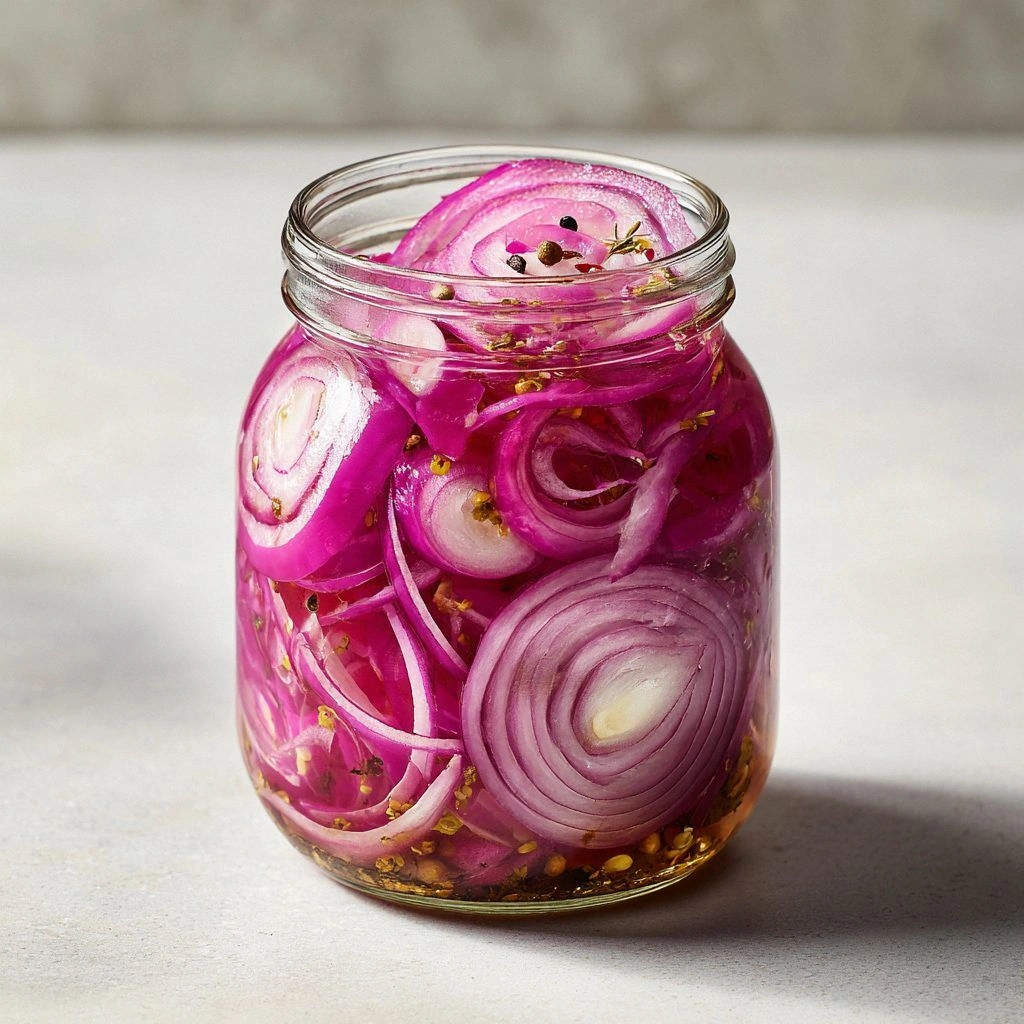
- Slice the red onions into thin, even rings using a sharp knife; the thickness should be about 1/8 inch to maintain crispness. The uniformity ensures even pickling and a consistent crunch. While slicing, notice the bright, almost translucent layers that hint at the onion’s freshness. This step is crucial; uneven slices can lead to uneven flavor absorption.
- In a medium saucepan, combine the white vinegar, water, granulated sugar, and sea salt. Stir until the sugar and salt dissolve completely, creating a smooth brine that coats each onion slice. The mixture should bubble gently, but avoid boiling at this point to preserve the delicate flavors. Once dissolved, remove from heat and let it cool slightly.
- Add the black peppercorns, bay leaf, mustard seeds, and coriander seeds to the brine; these aromatics infuse the liquid with depth. The spices should clink softly as they settle, signaling that they’re ready to release their essence. This step is where the magic begins, turning simple onions into a flavor powerhouse.
- Place the sliced onions into a sterilized glass jar, packing them tightly but not crushing them. The onions should sit just below the liquid’s surface; any exposed onion will brown and lose its crunch. The jar’s clean, airtight seal ensures a perfect pickle environment.
- Pour the warm brine over the onions, covering them completely. The liquid should be at least an inch above the onions; this guarantees even pickling and prevents air pockets. The onions will begin to settle, absorbing the flavors in a process that takes about 30 minutes to an hour.
- Seal the jar with a lid and refrigerate immediately. The pickles will develop their full flavor after at least 12 hours, but the best results come after 24 to 48 hours. The cold environment slows down the pickling process, allowing the onions to absorb the brine evenly.
- Add fresh dill sprigs and a pinch of red pepper flakes for the final flourish; these add a herbaceous brightness and a gentle heat. The dill’s aroma will mingle with the onions, creating a layered scent that’s both fresh and complex. Once added, give the jar a gentle shake to distribute the herbs evenly.
- Enjoy the pickles as soon as they’re ready, or let them mature for a richer flavor. The onions will stay crisp and flavorful for up to 3 weeks when stored in the refrigerator. If you prefer a milder taste, let them sit for a shorter time; the shorter the pickling period, the fresher the crunch.
That's it — you did it. But hold on, I've got a few more tricks that'll take this to another level...
Insider Tricks for Flawless Results
The Temperature Rule Nobody Follows
Keep the brine just below boiling; a gentle simmer preserves the onion’s crispness while still dissolving the sugar. If the liquid gets too hot, the onions will soften and lose their signature snap. I’ve found that a 180°F (82°C) temperature works perfectly for most kitchens.
Why Your Nose Knows Best
Smell the onions as they sit in the brine; they should emit a bright, vinegary aroma with hints of spice. If the scent feels flat, the brine is too weak or the onions are old. I once forgot to add the bay leaf, and the result was a lackluster pickle that didn’t excite the palate.
The 5-Minute Rest That Changes Everything
After refrigerating, let the jar rest at room temperature for five minutes before opening. This brief pause allows the flavors to settle and the onions to rehydrate slightly, enhancing the crunch. I’ve seen this trick make the difference between a good pickle and a great one.
Don’t Skimp on Sterilization
A clean jar is essential for safety and flavor. Boil the jar and lid for 10 minutes before filling; this eliminates any residual bacteria that could spoil the pickles. Skipping this step can lead to off flavors and a shorter shelf life.
Keep It Cool
Store the jar in the coldest part of the refrigerator, away from the door. Temperature fluctuations can cause condensation and dilute the brine, leading to soggy onions. A steady 40°F (4°C) is ideal.
Add a Splash of Water Before Reheating
When you want to reheat the pickles for a dish, add a tiny splash of water to the jar before microwaving. This steams the onions back to a crisp texture and prevents them from drying out. I use this trick every time I toss pickles into a stir‑fry.
Creative Twists and Variations
This recipe is a playground. Here are some of my favorite ways to switch things up:
Citrus Burst
Replace white vinegar with a mix of lime and orange juice for a bright, tropical flavor. The citrus will cut through the sweetness, creating a zesty kick that pairs well with seafood. This variation is perfect for summer barbecues.
Herb Garden
Add fresh thyme and rosemary instead of dill for a Mediterranean vibe. The earthy herbs give the onions a robust, savory profile that complements grilled lamb and roasted vegetables. A small pinch of oregano adds a subtle Mediterranean warmth.
Heat Wave
Increase the red pepper flakes to a tablespoon and add a sliced jalapeño for a fiery version. The heat balances the sweetness and adds a smoky undertone that’s great on tacos and nachos. Keep an eye on the spice level to avoid overwhelming the onions.
Smoky Sizzle
Toast the mustard seeds and coriander seeds in a dry skillet before adding them to the brine. This brings out a deeper, smoky flavor that adds depth. The toasted spices pair wonderfully with grilled burgers and sandwiches.
Herbal Fusion
Blend in a few sprigs of fresh basil and mint for a fresh, aromatic finish. The herbs add a cooling effect that balances the acidity and makes the pickles ideal for summer salads. This combo works well in Mediterranean-inspired dishes.
Sweet & Savory
Add a tablespoon of honey and a splash of soy sauce to create a sweet and savory pickle. The honey softens the acidity, while the soy sauce adds umami depth. This version is fantastic on sushi rolls and Asian-inspired bowls.
Storing and Bringing It Back to Life
Fridge Storage
Keep the jar sealed in the refrigerator for up to three weeks. The cold environment preserves the crunch and keeps the pickles safe to eat. Store the jar on a shelf rather than the door to maintain a stable temperature.
Freezer Friendly
For longer storage, transfer the pickles to an airtight freezer bag. They will remain good for up to two months. Thaw in the refrigerator overnight before using; the texture will remain crisp.
Best Reheating Method
If you need the pickles warm, place the jar in a pot of simmering water for 5 minutes. Avoid microwaving, as it can make the onions soggy. Add a splash of water before reheating to keep them from drying out.