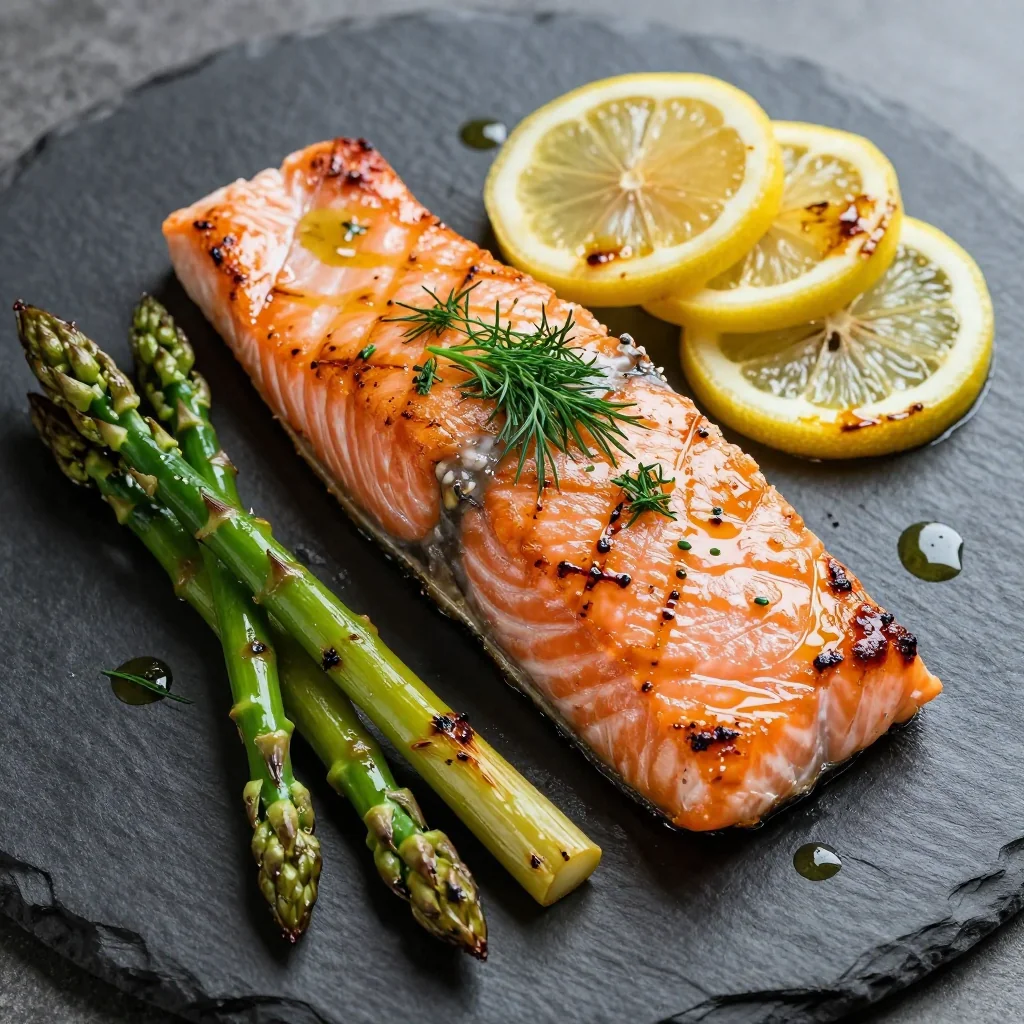
Love this? Pin it for later! 📌
Why This Recipe Works
- One-pan magic: Salmon and asparagus roast together, saving dishes and time.
- Omega-3 powerhouse: Each portion delivers over 2 g of heart-healthy EPA & DHA.
- Bright, no-sugar glaze: Lemon, garlic, and olive oil add punch without refined sugar.
- Meal-prep friendly: Filets reheat like a dream for tomorrow’s salad or grain bowl.
- Restaurant-level skin: High-heat sear keeps skin crispy without extra oil.
- Kid-approved veg: Roasting brings out asparagus’ natural sweetness—no mushy spears.
- Scale as needed: Works for two on date night or ten for Sunday supper.
- Reset mindset: Protein + fiber + healthy fat keeps blood sugar steady all evening.
Ingredients You'll Need
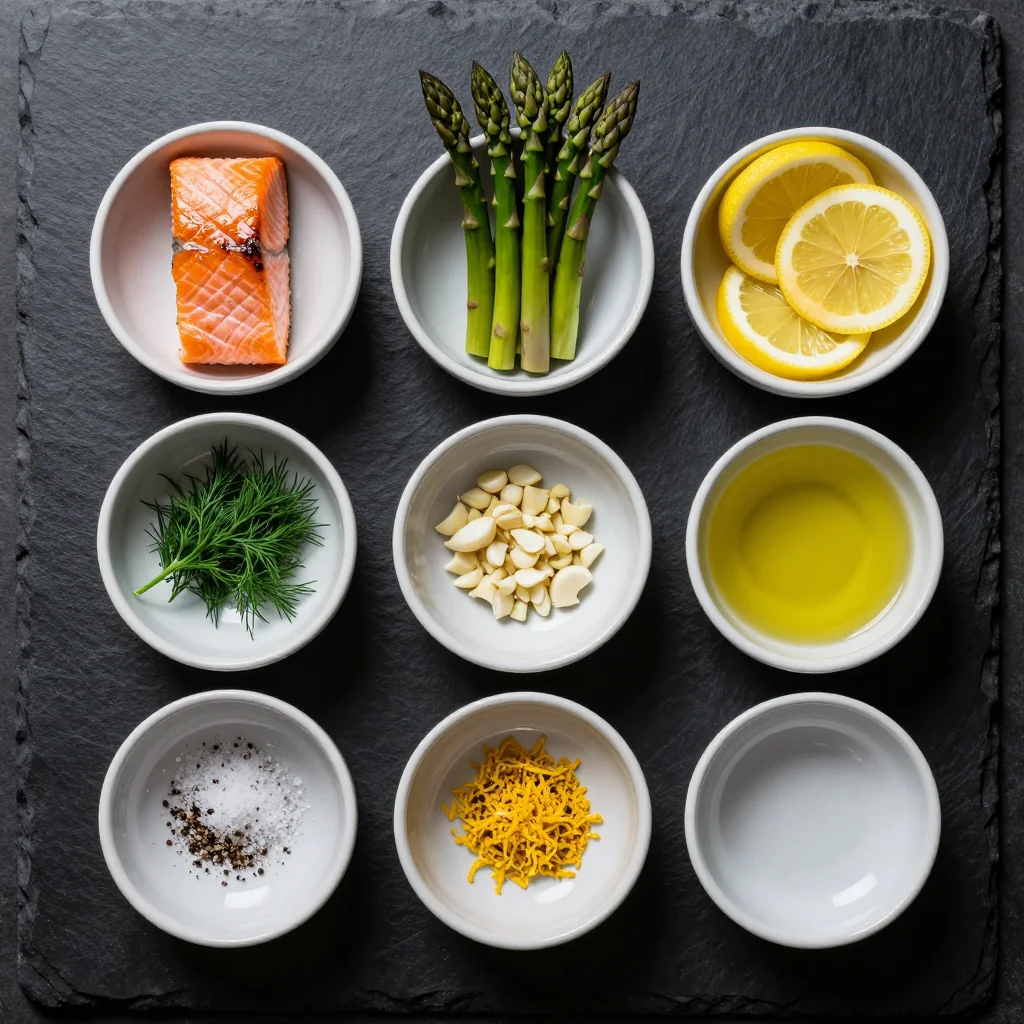
Great salmon starts at the counter. Look for fillets that are moist, translucent, and smell like the ocean, not fishy. I prefer center-cut pieces—about 1¼ in (3 cm) thick—so they cook evenly. Wild-caught Coho or King are my splurge, but responsibly farmed Atlantic works beautifully if that’s what your budget allows. Whatever you choose, ask the fishmonger to remove pin bones; it saves you tweezertime later.
Asparagus tips should be tight and purple-kissed; stalks should snap, not bend. Pencil-thin spears roast faster and look elegant, while thicker ones stay meaty—both work, just adjust timing. Buy organic if possible; asparagus is on the Clean Fifteen, but I still rinse well.
Olive oil matters here because the oven heat is high. Use an everyday extra-virgin (fruity but not grassy) or a high-quality refined avocado oil if you prefer a neutral taste. Butter lovers, feel free to melt a tablespoon into the glaze for restaurant richness.
Garlic should be fresh; pre-minced jars taste flat after roasting. Zest the lemons before juicing—oils in the skin hold more flavor than the juice alone. If you keep a microplane solely for citrus, now’s its moment to shine.
Sea salt flakes (I’m partial to Maldon) dissolve quickly and give gentle pops of salinity. Finish with cracked pepper, but go easy; you want the lemon to lead.
Substitutions? Swap salmon for Arctic char or trout; both cook similarly. No asparagus? Broccolini or green beans work—just halve the quantity so they roast, not steam. Lemon allergy is rare, but lime + a pinch of orange zest gives a similar sunshine note. And if you’re soy-free, coconut aminos stand in beautifully for the optional splash of umami.
How to Make Baked Salmon With Asparagus And Lemon For Reset
Preheat & Prep Pan
Position rack in upper third of oven; heat to 425 °F (220 °C). Line a rimmed half-sheet with parchment for zero stickage or use a silicone mat if you’re out. If your baking sheet is thin and prone to warping, flip it upside down so it stays flat under high heat.
Make the Lemony Glaze
In a small bowl whisk 3 Tbsp olive oil, 2 Tbsp fresh lemon juice, 1 tsp zest, 2 cloves garlic (minced), ½ tsp sea salt, and ¼ tsp red-pepper flakes if you like a gentle hum. Reserve 1 Tbsp of this mixture for finishing so the herbs stay vibrant.
Trim Asparagus
Hold one spear and bend until it snaps naturally; use that as a guide to trim the rest. Pat dry—water is the enemy of caramelization. Toss spears in half of the glaze, coating evenly, then spread them down the long sides of the pan leaving the center clear for the fish.
Season Salmon
Pat fillets very dry; moisture is the difference between crisp and rubbery skin. Brush flesh side with remaining glaze, then place skin-side down in the pan’s center. Tuck lemon slices underneath and around so their essential oils perfume the fish without scorching.
Roast
Slide pan into oven and roast 9 min for 1-in fillets (12 min for 1¼ in). Salmon is ready when it flakes but still looks glistening in the very center; it will carry-over cook as it rests. Asparagus should be blistered in spots yet remain verdant.
Broil for Finish
Switch oven to broil on high for 1–2 min to crisp salmon skin and char lemon edges. Watch like a hawk; broilers forgive nothing. Remove pan, transfer salmon to a warm plate, tent loosely, and let asparagus lounge another minute if you prefer softer tips.
Rest & Drizzle
Resting redistributes juices and keeps filets moist. Drizzle reserved fresh lemon mixture over everything, sprinkle with chopped parsley or dill, and add an extra pinch of flaky salt for crunch. Serve straight from the pan for rustic charm.
Expert Tips
Invest in an Oven Thermometer
Home ovens can drift 25–50 °F. A $10 thermometer ensures you’re actually at 425 °F for that perfect sear.
Dry = Crispy Skin
After unwrapping, place salmon on a wire rack in the fridge, uncovered, 30 min up to 8 h. Air circulation removes surface moisture.
Carry-Over is Real
Pull fish at 125 °F for medium; residual heat nudges it to 135 °F while it rests. Overcooking is the cardinal sin of salmon.
Size Spears Evenly
Mix fat and thin? Halve the thick ones lengthwise so everything finishes together; no rogue limp stalks.
Make Night-Before Marinade
Season fish, lay lemon on top, cover tightly, and refrigerate up to 12 h. The acid lightly “cooks” the exterior, boosting flavor without turning it ceviche-tough.
Reuse the Glaze
Boil leftover drizzle for 30 sec and spoon over tomorrow’s grain bowl—safe, smart, and zero waste.
Variations to Try
- Mediterranean: Add ½ cup cherry tomatoes, olives, and a sprinkle of feta during the last 3 min of roasting.
- Asian-Reset: Swap lemon for lime, add 1 tsp grated ginger and 1 tsp sesame oil to glaze; finish with sesame seeds and cilantro.
- Herb-Crust: Press a mixture of ¼ cup panko, 2 Tbsp parsley, and 1 Tbsp dill onto salmon before roasting for crunch.
- Spicy Cajun: Dust fillets with 1 tsp smoked paprika, ½ tsp thyme, and ¼ tsp cayenne; serve over cauliflower rice.
- Maple-Miso: Whisk 1 Tbsp white miso and 1 Tbsp maple syrup into the glaze for sweet-salty depth.
Storage Tips
Cool leftovers within 2 h, transfer to airtight glass, and refrigerate up to 3 days. To reheat, place salmon on a wire rack set in a rimmed pan at 275 °F (135 °C) for 8–10 min; this gentle heat prevents the dreaded chalky edge. Microwave works in a pinch—cover with a damp paper towel and use 50 % power in 30-second bursts. Asparagus reheats best in a dry skillet over medium for 2 min; it regains snap and avoids microwave sogginess.
Freezing: Wrap each fillet tightly in parchment, then foil, then into a zip bag with air pressed out. Freeze up to 2 months for best texture. Thaw overnight in the fridge and proceed with reheating above. Note: the lemon glaze may mellow, so freshen with a squeeze of citrus after thawing.
Meal-prep assembly: Cube salmon and asparagus, combine with cooked farro, diced cucumber, and a dollop of tzatziki for Mediterranean boxes that hold 4 days.
Frequently Asked Questions
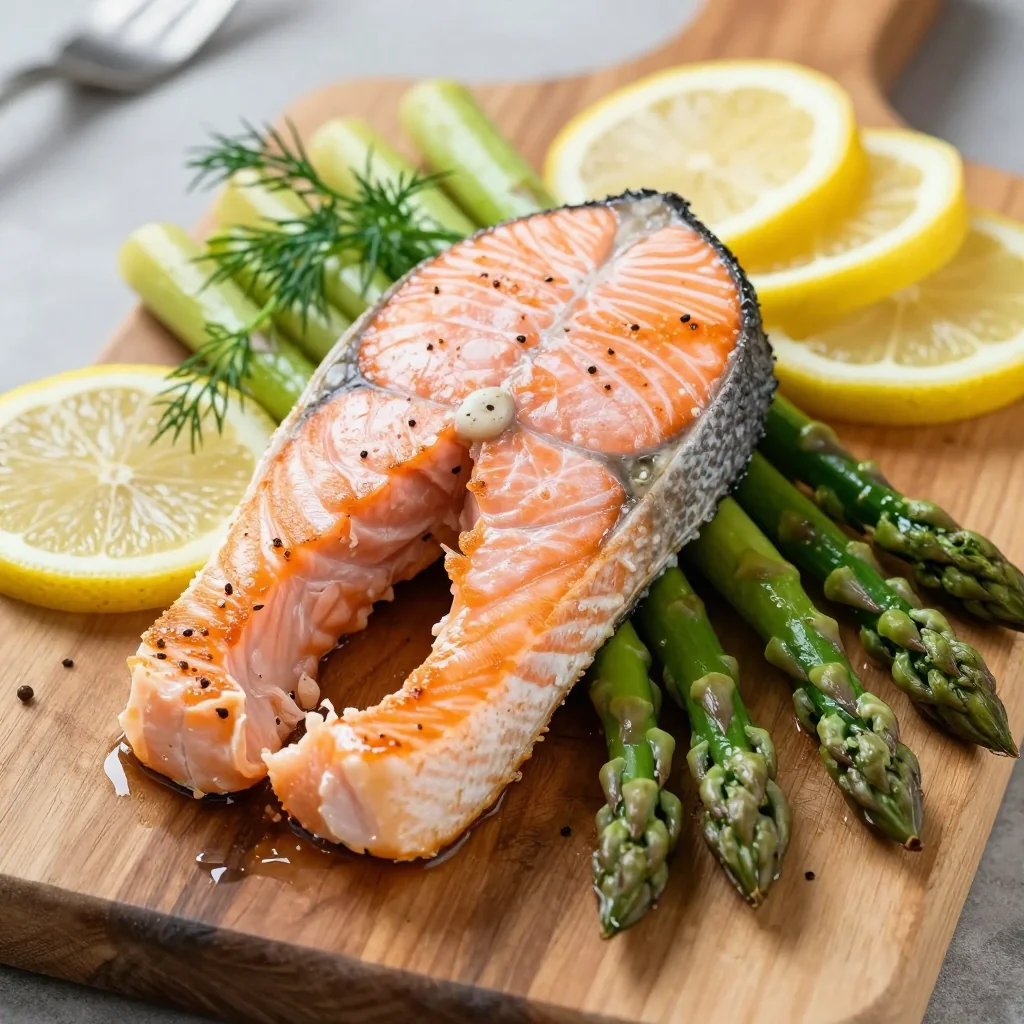
Baked Salmon With Asparagus And Lemon For Reset
Ingredients
Instructions
- Preheat: Heat oven to 425 °F (220 °C). Line a rimmed baking sheet with parchment.
- Stir glaze: Whisk olive oil, lemon juice, zest, garlic, salt, pepper, and pepper flakes. Reserve 1 Tbsp.
- Season veg: Toss asparagus with half the glaze; lay on pan edges.
- Add fish: Brush salmon with remaining glaze; place skin-down in center; top with lemon slices.
- Roast: Bake 9–12 min until center of fish registers 125 °F (medium).
- Broil: Broil 1–2 min to crisp skin.
- Finish: Drizzle reserved glaze, sprinkle herbs, add flaky salt, serve hot.
Recipe Notes
Thicker fillets need an extra 2–3 min; thinner ones finish 1 min early. Always use an instant-read thermometer for best results.