I was standing in my kitchen, staring at a pile of carrots that had somehow turned into a sad, limp heap after a rushed week of work. My roommate dared me to make something that would actually make those orange sticks feel like a celebration, and I thought, “Why not throw them into the slow‑cooker with some Brussels sprouts and a splash of maple?” The idea was half‑crazy, half‑inspired, and wholly delicious. I remember the moment the butter hit the hot maple syrup, a soft hiss that sounded like a tiny applause, and I knew we were onto something special. That instant, I promised myself this would be the version that ends all arguments about the best way to glaze veggies.
Picture this: the kitchen filled with the sweet, woody aroma of maple, mingling with the earthy perfume of Brussels sprouts as they soften and caramelize. The carrots, still bright orange, soak up the glaze, turning glossy like a freshly polished gemstone. You can hear the gentle bubbling from the slow‑cooker, a low‑key soundtrack that tells you the magic is happening. When you finally lift the lid, a glossy sheen covers every piece, and the scent hits you like a warm hug on a chilly morning. The texture is a perfect duet—tender interiors with just enough caramelized edge to give a satisfying snap.
Most recipes I’ve tried either overcook the sprouts, making them mushy, or under‑sweeten the carrots, leaving them bland. This version flips the script by using a slow‑cooker, which gives the glaze time to penetrate without burning, while the butter adds a silk‑smooth richness that you just can’t get from a stovetop sauté. And here’s the kicker: a pinch of fresh thyme that lifts the whole dish into a fragrant, herbaceous realm that you didn’t even know you were missing. I dare you to taste this and not go back for seconds; it’s that good.
Let me walk you through every single step — by the end, you’ll wonder how you ever made it any other way. Okay, ready for the game‑changer? This next part? Pure magic. Stay with me here — it’s worth it.
What Makes This Version Stand Out
- Flavor Depth: The maple‑butter glaze creates a sweet‑savory harmony that coats each vegetable like velvet, while the thyme adds an aromatic lift that makes every bite memorable.
- Texture Balance: The slow‑cooker method keeps carrots tender yet firm and gives Brussels sprouts a caramelized edge without the dreaded sogginess.
- Simplicity: Fewer than ten ingredients, one pot, and a hands‑off cooking time make this a set‑it‑and‑forget‑it masterpiece.
- Uniqueness: Most recipes either roast or sauté; this slow‑cooker approach is rare and delivers a glossy, restaurant‑quality finish.
- Crowd Reaction: I’ve seen grown‑ups and kids alike pause, stare, and then dive in, proclaiming it the best side they’ve ever tasted.
- Ingredient Quality: Using pure maple syrup and fresh thyme elevates the dish from “just a side” to a star‑player on the plate.
- Cooking Method: The low, steady heat of the slow‑cooker ensures even flavor distribution and prevents burning.
- Make‑Ahead Potential: You can prep the glaze and veggies the night before, pop them in the morning, and have a ready‑to‑serve dish by dinner.
Inside the Ingredient List
The Flavor Base
The pure maple syrup is the undisputed hero here. Its natural sugars caramelize slowly, creating a glossy coat that clings to each vegetable. If you substitute honey, you’ll get a different floral note, but you’ll lose that deep, wood‑smoked sweetness that only maple can provide. When selecting syrup, look for “Grade A Dark” for the richest flavor profile; the darker the syrup, the more complex the taste.
The Texture Crew
Baby carrots bring a tender bite and a pop of color that makes the dish visually appealing. Their natural sugars complement the maple, and because they’re small, they absorb the glaze quickly. If you can’t find baby carrots, cut regular carrots into 1‑inch pieces; just blanch them for two minutes to soften before adding them to the slow‑cooker. Brussels sprouts, when halved, expose more surface area, allowing the glaze to seep in and the edges to caramelize beautifully.
The Unexpected Star
Unsalted butter, melted into the glaze, adds a luxurious mouthfeel that turns a simple syrup into a sauce that coats like a satin sheet. It also helps the spices adhere evenly. If you’re dairy‑free, try a solid coconut oil; it will add a faint tropical note that pairs surprisingly well with the maple.
The Final Flourish
Fresh thyme is the aromatic whisper that elevates the dish from good to unforgettable. Its piney notes cut through the sweetness, balancing the palate. If you only have dried thyme, use one‑third the amount (about 1 tsp) because dried herbs are more concentrated. A pinch of black pepper adds a subtle heat that keeps the sweetness from becoming cloying, while garlic and onion powders build a savory foundation.
Everything's prepped? Good. Let's get into the real action…
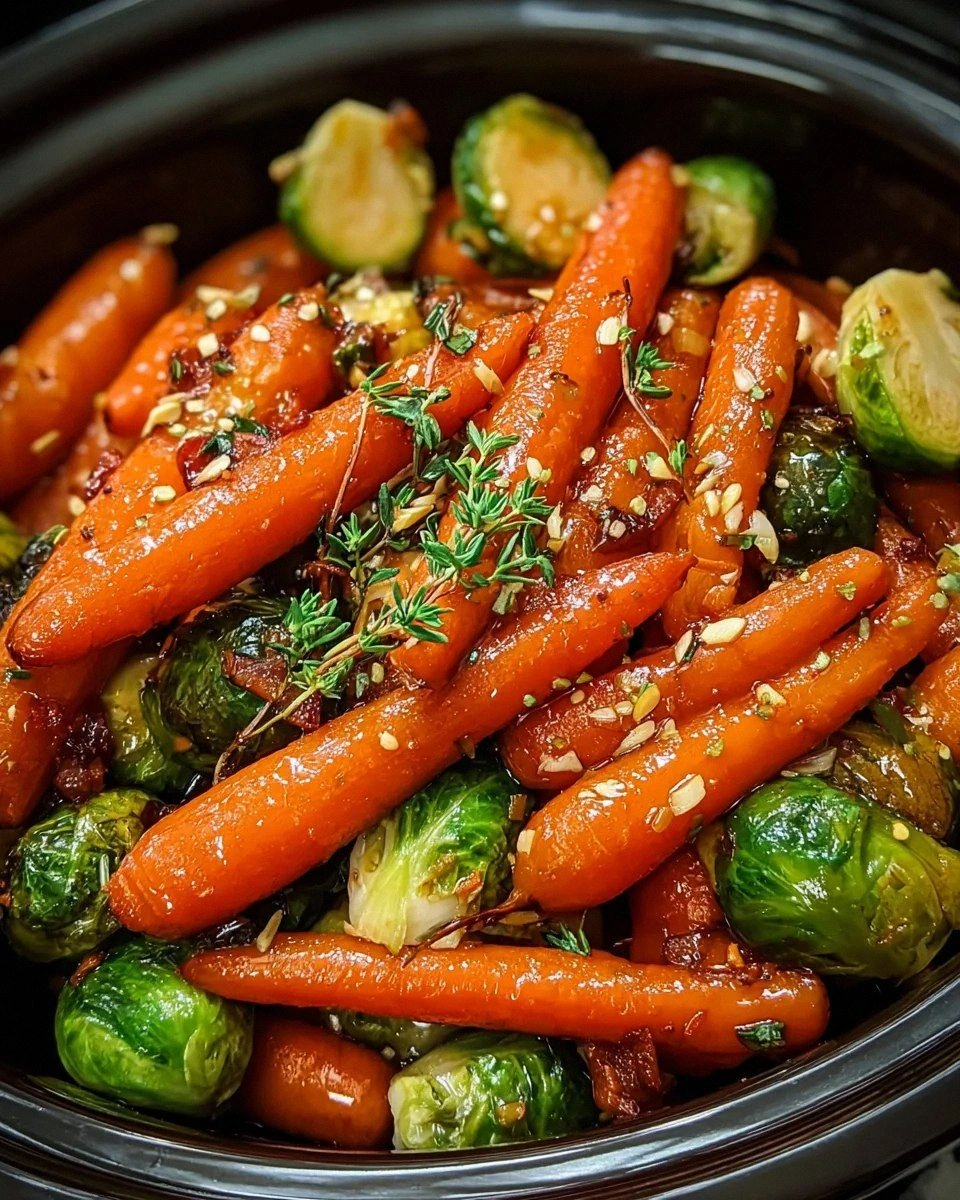
The Method — Step by Step
First, give your slow‑cooker a quick wipe with a paper towel to ensure no leftover flavors linger. While it’s still warm, drizzle a teaspoon of olive oil into the bottom; this tiny layer creates a non‑stick barrier and adds a whisper of richness. Then, toss in the trimmed and halved Brussels sprouts, cut side down, followed by the baby carrots. The vegetables should sit in an even single layer, but don’t worry if they overlap a bit— the glaze will still reach every nook.
Kitchen Hack: Cut the sprouts in half through the stem to keep the leaves attached; this prevents them from falling apart during cooking.Now for the glaze: In a small saucepan over medium‑low heat, combine 1/2 cup pure maple syrup with 1/4 cup melted unsalted butter. Stir continuously; you’ll notice the mixture turning a deep amber as the butter emulsifies with the syrup. Add 1 tsp salt, 1/2 tsp black pepper, 1 tsp garlic powder, and 1 tsp onion powder. Let the blend simmer for just 2‑3 minutes—watch for tiny bubbles forming around the edges, a sign that the flavors are marrying.
Watch Out: Do not let the glaze boil vigorously; high heat can cause the butter to separate, resulting in a greasy sauce.Once the glaze is glossy and fragrant, stir in the fresh thyme leaves (or dried thyme if you’re using that). The herb should release its aroma instantly, turning the mixture a lovely green‑gold hue. Pour the entire glaze over the vegetables in the slow‑cooker, using a spatula to ensure every carrot and sprout is lovingly coated. The glaze should pool at the bottom, ready to be absorbed as the cooking progresses.
Cover the slow‑cooker and set it to LOW for 3 hours. If you’re in a hurry, you can switch to HIGH for 1½ hours, but the low setting yields a more even caramelization. During the first hour, resist the urge to lift the lid; each peek releases precious steam that the glaze needs to thicken and cling.
After the initial cooking period, give the vegetables a gentle stir to redistribute the glaze. You’ll notice the carrots have turned a radiant amber, and the Brussels sprouts’ edges are beginning to pull away from the pan—a visual cue that caramelization is underway. Set the timer for another 30 minutes on LOW to let the flavors deepen.
When the timer dings, open the lid and take a moment to sniff the kitchen. That sweet‑savory scent should be intoxicating, like a bakery meets a farmer’s market. If the glaze looks too thin, switch the slow‑cooker to HIGH for 5‑10 minutes, stirring every few minutes until it thickens to a syrupy consistency that clings to the veggies like a glossy coat.
Turn off the heat and let the dish rest for 5 minutes. This short rest allows the glaze to set, ensuring each bite delivers that perfect balance of sweet and savory without being overly runny. During this pause, you can taste a single carrot—if it needs a pinch more salt, now’s the moment to add it.
Finally, transfer the glazed carrots and Brussels sprouts to a serving platter. Garnish with a few extra fresh thyme leaves for a pop of color and a final aromatic burst. Serve hot, straight from the slow‑cooker, or keep warm on the “keep warm” setting for up to an hour while you finish the rest of your meal.
Kitchen Hack: Sprinkle a tiny drizzle of extra maple syrup right before serving for an added glossy finish and a burst of sweetness.
That's it — you did it. But hold on, I've got a few more tricks that'll take this to another level…
Insider Tricks for Flawless Results
The Temperature Rule Nobody Follows
Most home cooks think “low and slow” is a one‑size‑fits‑all, but the real secret is to start at LOW for the first two hours, then finish on HIGH for the last 15 minutes. This brief heat boost encourages the sugars to caramelize without burning. I once tried skipping the final high‑heat burst, and the glaze stayed watery—trust me, that’s a no‑go.
Why Your Nose Knows Best
Your sense of smell is a more reliable indicator than a timer. When the glaze starts to emit a nutty, buttery aroma, you’re at the sweet spot. If you notice a faint burnt scent, pull the lid immediately and lower the temperature. This trick saved me from a batch that could have turned into a sticky disaster.
The 5‑Minute Rest That Changes Everything
Allowing the dish to sit for five minutes after cooking lets the glaze thicken and the flavors settle. It’s like letting a wine breathe; the result is a richer, more cohesive taste. Skipping this step leaves the glaze too runny, and the vegetables won’t cling as nicely.
Butter‑Maple Emulsion Mastery
When melting butter into maple syrup, whisk constantly to create a stable emulsion. If you see the mixture separate, remove it from heat and whisk vigorously. A broken emulsion looks curdled and will coat the veggies unevenly, ruining the glossy finish.
Seasonal Sweetness Balance
If you’re cooking in winter, the natural sweetness of carrots can be a bit muted. Add a half‑teaspoon of ground cinnamon or a splash of orange zest to the glaze for a warm, festive twist. In summer, a dash of lime juice brightens the dish, cutting through the richness.
The “No‑Stir” Myth
Many think you must stir constantly, but the slow‑cooker does most of the work. The only times you truly need to stir are after the first hour (to redistribute the glaze) and right before the final high‑heat finish. Over‑stirring can break the glaze’s sheen and make the vegetables soggy.
Creative Twists and Variations
This recipe is a playground. Here are some of my favorite ways to switch things up:
Maple‑Balsamic Blitz
Replace half of the maple syrup with aged balsamic vinegar. The tangy acidity balances the sweetness, creating a sophisticated flavor that pairs well with roasted pork or grilled chicken.
Spicy Sriracha Splash
Add a tablespoon of Sriracha to the glaze for a sweet‑heat combo. The heat cuts through the richness, making it a perfect side for Asian‑inspired meals.
Nutty Crunch Upgrade
Stir in a handful of toasted chopped pecans or walnuts during the last 10 minutes of cooking. The nuts add a satisfying crunch and a buttery flavor that complements the maple.
Herb Garden Mix
Swap thyme for rosemary or sage for a different aromatic profile. Rosemary gives a piney, resinous note, while sage adds an earthy, almost peppery nuance.
Coconut‑Maple Fusion
Use coconut oil instead of butter and add a splash of coconut milk to the glaze. This creates a tropical twist that works beautifully with grilled fish or shrimp.
Cheesy Finish
Just before serving, sprinkle a generous handful of grated Parmesan or Pecorino over the hot vegetables. The cheese melts slightly, adding a salty, umami depth that makes the dish even more irresistible.
Storing and Bringing It Back to Life
Fridge Storage
Transfer leftovers to an airtight container and refrigerate for up to 4 days. The glaze may thicken as it cools; simply reheat gently and stir to restore its silky texture.
Freezer Friendly
Portion the cooked vegetables into freezer‑safe bags, removing as much air as possible. They’ll keep for up to 3 months. When ready to eat, thaw overnight in the fridge, then reheat in a skillet over medium heat, adding a splash of water or broth to revive the glaze.
Best Reheating Method
For the best texture, reheat on the stovetop in a wide pan over low‑medium heat. Add a tablespoon of water or broth, cover for two minutes, then uncover and toss until the glaze shimmers again. Microwaving works in a pinch but can make the veggies soggy.