Picture this: it’s a rainy Thursday evening, the kind where the kitchen lights feel like a small, cozy campfire. I was standing over a pot of simmering stock, a half‑filled bottle of white wine, and a bowl of fresh lobster claws that had just arrived from the dock. I tried to whisk a quick pasta sauce, but the garlic I tossed in was raw and the butter had browned too fast, turning my kitchen into a scene from a cooking disaster movie. The moment the sauce hit the stove, the aroma hit me like a wave of sea‑salted breeze, and I knew I was about to create something that would turn a simple dinner into a celebration. I dare you to taste this and not go back for seconds.
I’ve spent countless nights chasing that elusive “restaurant‑quality” seafood pasta, and every time I thought I’d nailed it, something fell flat—too watery, too greasy, or just plain bland. The trick? A sauce that coats the pasta like velvet, a balance of sweet lobster, briny scallops, and a splash of citrus that cuts through the richness. Most recipes get this completely wrong by over‑cooking the seafood or using too much cream, but this version keeps each component shining in its own right. The result is a dish that feels like a hug from the ocean, with every bite delivering a burst of umami, a hint of pepper, and a whisper of lemon zest. If you’ve ever struggled with seafood pasta, you’re not alone—and I’ve got the fix.
What makes this recipe stand out is that it’s not just a collection of ingredients; it’s a carefully choreographed dance between flavors, textures, and techniques. I’ve refined every step to ensure the lobster remains tender, the scallops stay plump, and the pasta never sticks together like a bad relationship. The sauce’s silky texture is achieved by balancing cream and stock, and the final flourish of parsley and Parmesan adds a fresh, nutty finish. I’ve also included a few micro‑challenges—like timing the addition of the white wine—to keep your kitchen skills sharp. By the end, you’ll wonder how you ever made it any other way.
But first, let’s talk about why this version is hands down the best you’ll ever make at home. It’s not just the ingredients; it’s the way they’re brought together, the small hacks that elevate the dish, and the confidence it gives you to experiment in your own kitchen. I’ve poured a lot of love into each detail, and I’m excited to walk you through every single step. Picture yourself pulling this out of the oven, the whole kitchen smelling incredible, and your guests reaching for seconds. Okay, ready for the game‑changer? Let’s dive in.
What Makes This Version Stand Out
- Flavor Depth: The sauce layers sweet, briny, and citrusy notes that mingle without overpowering, creating a complex palate that feels both fresh and indulgent.
- Texture Harmony: Lobster stays tender while scallops retain a slight bite, and the linguine is perfectly al dente—no mushy noodles or rubbery seafood.
- Simplicity: With only a handful of pantry staples and fresh ingredients, you can whip this up in under an hour, even on a busy weeknight.
- Ingredient Quality: Using fresh, high‑grade lobster and scallops elevates the dish, turning an ordinary pasta into a luxury experience.
- Make‑Ahead Potential: The sauce can be made a day ahead, letting the flavors meld while you prepare other elements of your dinner.
- Crowd Reaction: Friends and family often ask for the recipe after the first plate, and many say they’ve never tasted seafood pasta that’s both elegant and comforting.
- Versatility: Swap linguine for fettuccine, or add a splash of cream for a richer sauce—this recipe adapts to what you have on hand.
- Time Efficiency: Each step is timed to keep the dish moving smoothly, so you’re not stuck staring at the stove waiting for something to happen.
Alright, let's break down exactly what goes into this masterpiece. And before we get into the meat of the recipe, here’s a quick kitchen hack to keep you ahead of the game.
Inside the Ingredient List
The Flavor Base
The foundation of this dish is a simple yet powerful sauce that marries butter, olive oil, garlic, and a splash of white wine. The butter provides a silky richness that coats the pasta, while the olive oil adds a subtle peppery undertone. Garlic, when sautéed just until fragrant, releases its sweet, aromatic compounds, but if you overcook it, it turns bitter—so keep a close eye on it. The white wine is the star that cuts through the cream’s heaviness and adds a subtle acidity that brightens the entire dish.
The Texture Crew
Linguine or fettuccine is the perfect canvas for this sauce, offering a sturdy yet tender bite. The pasta should be cooked al dente, meaning it still has a slight bite under the fork, ensuring it doesn’t become mushy when combined with the sauce. The seafood—lobster and scallops—must be handled delicately. Lobster is best cut into bite‑size pieces after boiling, while scallops are sliced lengthwise to maintain their natural shape and avoid tearing. If you rush the cooking time, the lobster can become rubbery, and the scallops may split apart.
The Unexpected Star
Capers add a briny punch that complements the sweet lobster, while a pinch of cayenne pepper brings a subtle heat that lingers on the palate. Some cooks like to add sun‑dried tomatoes for a burst of umami and a pop of color, but this recipe keeps it simple so the seafood remains the hero. Lemon zest and a splash of lemon juice provide a citrusy brightness that lifts the richness of the cream and butter, preventing the dish from feeling heavy. The final sprinkle of freshly chopped parsley not only adds color but also a fresh, herbal note that balances the dish.
The Final Flourish
Parmesan cheese is grated finely to melt into the sauce, giving it a nutty, salty finish that ties all the flavors together. The amount of salt and pepper is crucial—too much salt can overpower the delicate seafood, while too little pepper can make the dish feel flat. A splash of high‑quality chicken or vegetable stock is added to the pasta water to keep the noodles moist and flavorful. If you’re feeling adventurous, a small amount of cream can be folded in at the end for an extra silky texture, but the base recipe already delivers a luscious mouthfeel.
Everything's prepped? Good. Let's get into the real action.
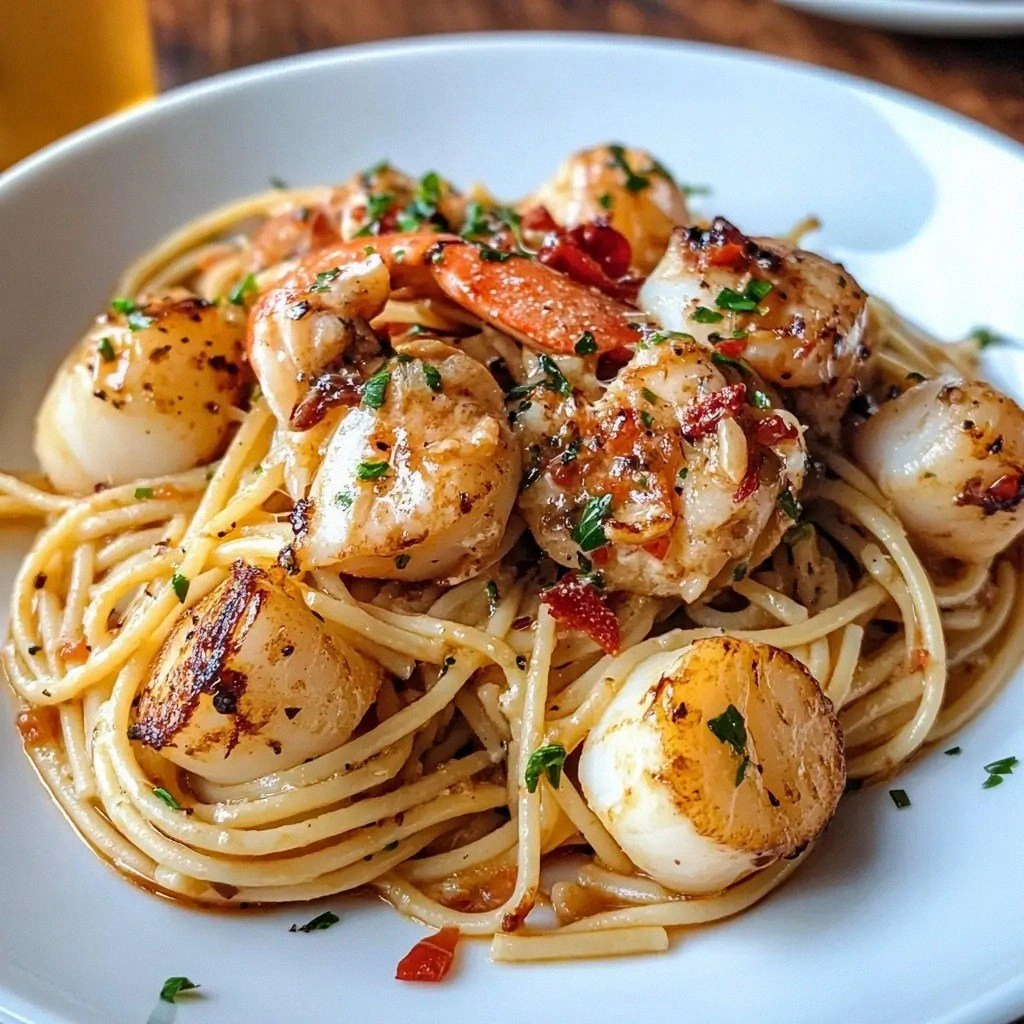
The Method — Step by Step
- Bring a large pot of salted water to a rolling boil. Add the linguine and cook according to the package instructions until al dente—about 8–9 minutes. Reserve a cup of pasta water before draining; this starchy liquid will help bind the sauce. While the pasta cooks, slice the lobster into bite‑sized pieces, and cut the scallops lengthwise. Keep everything ready because timing is key.
- In a large skillet, heat 2 tablespoons of olive oil over medium heat. Add the minced garlic and sauté until fragrant, about 30 seconds—watch it closely so it doesn’t brown. This quick sauté releases the garlic’s natural sugars without turning it bitter. When the garlic is golden, pour in 1/2 cup of dry white wine, letting it simmer for 2–3 minutes until it reduces by half. This reduction concentrates the wine’s acidity, balancing the cream later.
- Add 4 tablespoons of butter to the skillet, letting it melt into the wine mixture. Stir constantly to avoid scorching. This butter‑wine base creates a silky sauce that will cling to the pasta. If you notice the butter beginning to brown, lower the heat and add a splash of pasta water to keep it from burning. The goal is a golden, glossy sauce, not a browned one.
- Pour in 1 cup of heavy cream and stir to combine. Let the sauce simmer gently for 3–4 minutes, allowing the cream to thicken slightly. The sauce should look glossy and coat the back of a spoon. If it gets too thick, add a bit of the reserved pasta water to loosen it. This step is where the sauce gains its velvety texture.
- Introduce the lemon zest, a pinch of cayenne pepper, and 2 tablespoons of capers to the skillet. The zest releases bright citrus oils, the cayenne adds a subtle heat, and the capers bring a briny punch. Stir everything together, letting the flavors meld for 1 minute. Watch out: the capers can be salty, so taste before adding more salt.
- Add the lobster and scallop pieces to the sauce, gently folding them in. Cook for 3–4 minutes, just until the seafood is heated through but still tender. The key is not to over‑cook; the lobster should be pink and the scallops should hold their shape. This step ensures the seafood flavors are infused into the sauce without becoming rubbery.
- Drain the pasta and add it directly to the skillet, tossing everything together. If the sauce seems too thick, drizzle in a splash of reserved pasta water to achieve a silky consistency. Let the pasta and sauce cook together for 1 minute so the noodles absorb the flavors. This is the moment of truth—your dish should look glossy, fragrant, and ready to serve.
- Stir in 1/2 cup of grated Parmesan and 1 tablespoon of chopped parsley. The cheese melts into the sauce, adding a nutty depth, while the parsley offers a fresh herbal contrast. Taste the sauce and adjust salt and pepper to your preference. The final touch is a squeeze of fresh lemon juice, which brightens the dish and balances the richness.
- Transfer the pasta to a warm serving dish and garnish with extra parsley and a drizzle of olive oil if desired. Serve immediately while the sauce is still warm and the seafood is at its peak tenderness. The aroma alone should make your guests swoon before the first bite.
- If you’re hosting a dinner party, consider plating each portion in a shallow bowl and topping it with a light dusting of grated Parmesan and a few capers for an elegant finish. This dish pairs beautifully with a crisp white wine like a chilled Sauvignon Blanc, which complements the citrus and seafood flavors. Remember to keep the sauce warm; if it cools, it can thicken and lose its silky sheen.
That's it—you did it. But hold on, I've got a few more tricks that'll take this to another level.
Insider Tricks for Flawless Results
The Temperature Rule Nobody Follows
Many cooks let their sauce simmer at a rolling boil, but this can cause the butter to separate and the cream to curdle. I always keep the heat low, just enough to keep the sauce warm and glossy. This gentle simmer preserves the emulsion and keeps the sauce silky. If you notice the sauce starting to look oily, reduce the heat immediately. A steady, low simmer is the secret to a professional‑looking sauce.
Why Your Nose Knows Best
The first scent you catch from the sauce is a powerful indicator of success. If the aroma is overwhelmingly buttery, it’s a sign the butter is browning. If it smells too sharp or vinegary, the wine reduction is over‑cooked. Trust your nose; it will guide you to the perfect balance of flavors. I’ve learned to pause and breathe in the sauce’s fragrance before adding the next ingredient. A well‑smelling sauce means you’re on the right track.
The 5-Minute Rest That Changes Everything
Once the pasta is tossed with the sauce, let it rest on the stove for a minute before serving. This brief rest allows the pasta to finish absorbing the sauce and ensures every strand is coated. It also gives the flavors time to meld, creating a richer taste. If you rush to plate immediately, you might miss that final burst of flavor. A short pause is a simple trick that elevates the dish.
How to Keep Seafood Tender
The key to tender lobster and scallops is minimal cooking time. I add them to the sauce just until they’re heated through—usually 3–4 minutes. Over‑cooking them turns them rubbery and unappetizing. To check doneness, look for the lobster to be pink and the scallops to hold their shape. If you’re unsure, a quick test bite will tell you if they’re ready.
Balancing Salt Without Overpowering
Salt is a flavor enhancer, but too much can drown the delicate seafood. I start with 1 teaspoon of salt, then taste the sauce and adjust as needed. Adding salt after the pasta is tossed ensures it’s evenly distributed. A pinch of cayenne or a splash of lemon juice can help balance the saltiness, giving the dish a fresh finish.
Creative Twists and Variations
This recipe is a playground. Here are some of my favorite ways to switch things up:
Spicy Cajun Version
Add 1 teaspoon of Cajun seasoning to the garlic sauté. This gives the sauce a smoky, spicy kick that pairs beautifully with the sweet lobster. Use a smaller amount of butter to keep the dish from becoming too heavy. Finish with a sprinkle of chopped fresh thyme for an aromatic finish. This variation is perfect for those who love a little heat.
Alfredo Fusion
Replace the heavy cream with a mixture of half-and-half and grated Parmesan to create a lighter Alfredo base. Stir in a tablespoon of Dijon mustard for depth. The result is a creamy, tangy sauce that still lets the seafood shine. This version is ideal for those who crave a classic Alfredo feel.
Herb Garden Delight
Swap parsley for a mix of basil, oregano, and thyme. Add a splash of white wine vinegar to brighten the dish. Finish with a drizzle of extra‑virgin olive oil. The herb blend gives the dish a Mediterranean flair while keeping the seafood at the center.
Seafood Pasta Bowl
Serve the pasta over a bed of sautéed spinach or arugula. Top with shaved Parmesan and a squeeze of lemon. This adds a green, fresh layer that balances the richness. The bowl format is great for casual family dinners.
Vegan Twist
Replace the lobster and scallops with sautéed mushrooms and artichoke hearts. Use a plant‑based cream and vegan Parmesan. The earthy flavors mimic the depth of seafood, and the dish becomes a hearty, plant‑based alternative. This version is perfect for guests who prefer vegan options.
Breakfast‑Style Lobster Pasta
Add a few scrambled eggs into the sauce just before serving. The eggs add a silky texture and protein boost. Top with fresh chives and a dash of paprika. This breakfast‑style take turns the dish into a brunch favorite, offering a unique twist on traditional pasta.
Storing and Bringing It Back to Life
Fridge Storage
Cool the pasta completely before refrigerating. Store it in an airtight container for up to 2 days. When reheating, add a splash of water or stock to loosen the sauce. Stir gently over low heat until warm. This method preserves the sauce’s silky texture and prevents the pasta from drying out.
Freezer Friendly
Separate the pasta and sauce before freezing. Freeze each component in airtight containers for up to 1 month. Thaw overnight in the fridge, then reheat together. Add a small amount of cream or stock to restore the sauce’s richness. Freezing is a great way to have a quick, gourmet meal ready.
Best Reheating Method
Reheat the pasta and sauce over low heat, stirring constantly. Add a tiny splash of water or stock to keep the sauce from thickening too much. Once heated through, taste and adjust seasoning. Serve immediately, and enjoy the dish as if it were freshly made. A gentle reheating preserves the delicate flavors and textures.