It started on a rainy Tuesday when I was trying to salvage a batch of over‑cooked chicken that had turned into a rubbery disaster. I stared at the pan, thinking, “I need something that can rescue this chicken and turn it into a comforting, crowd‑pleasing dish.” That night, I pulled a handful of onions from my fridge, melted butter, and a splash of broth, and the kitchen filled with a caramelized aroma that made my taste buds dance. By the time I was done, the chicken was tender, the onions were golden‑brown, and the sauce had thickened into a silky, buttery glaze that clung to every grain of orzo. The result was so delicious that I immediately called my friend, who was skeptical about casseroles, and said, “I dare you to taste this and not go back for seconds.” The challenge was accepted, and the dish became an instant favorite.
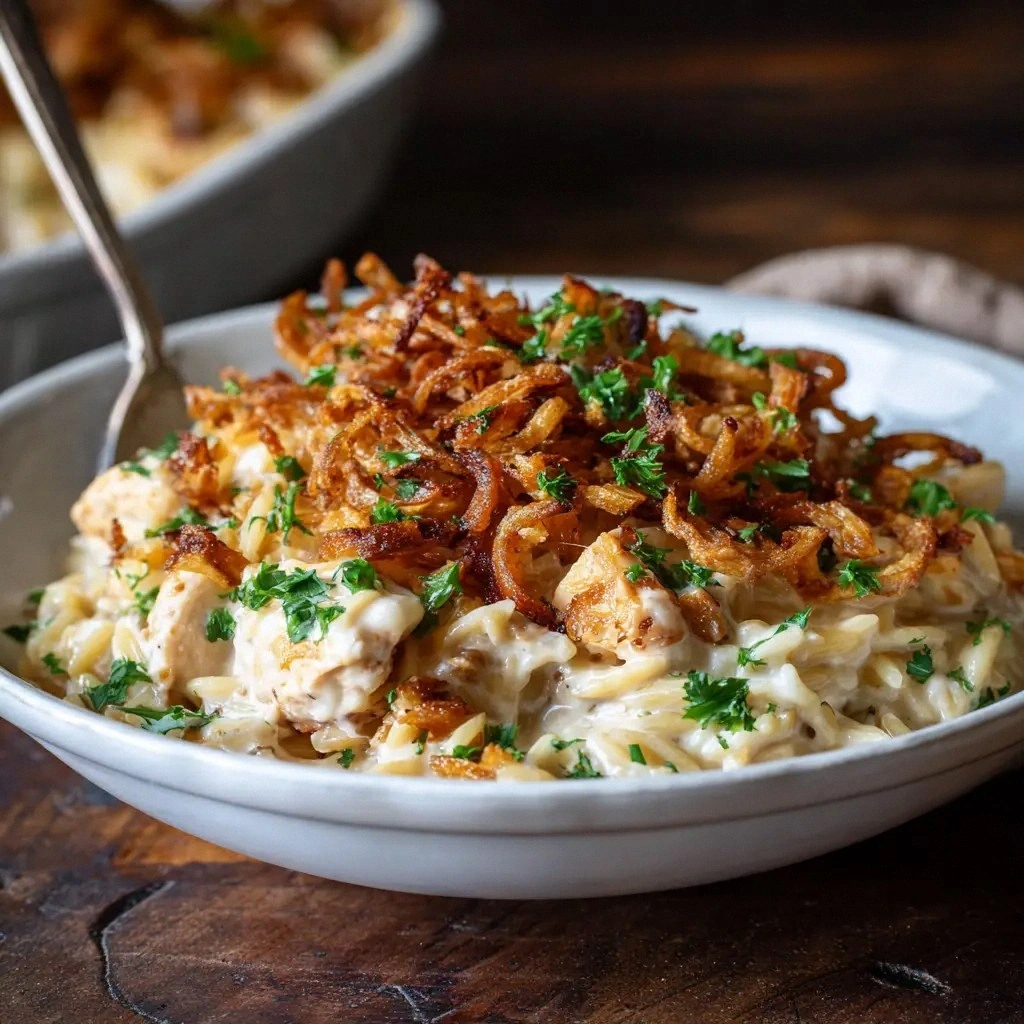
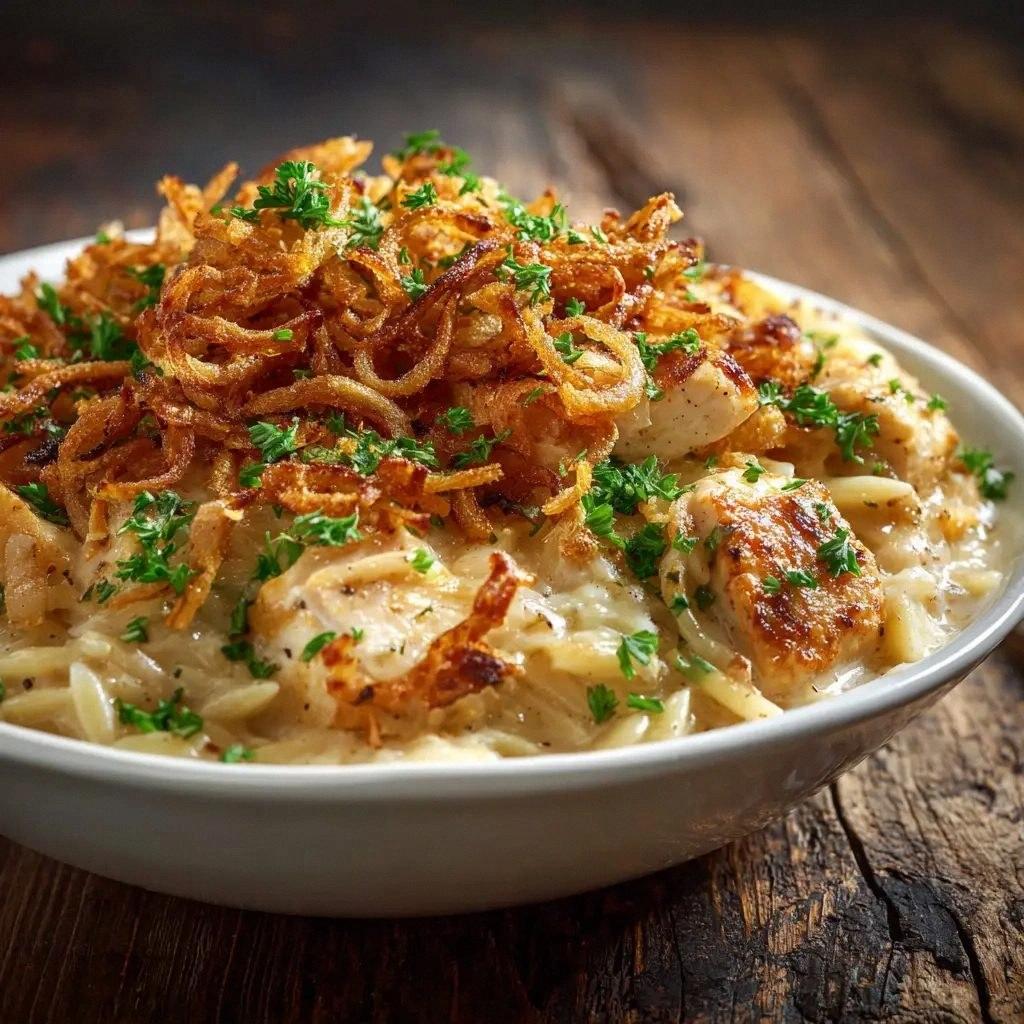
I’m not just talking about a casserole; this is a culinary revelation that redefines the comfort‑food genre. The combination of sweet caramelized onions, savory chicken, a velvety sauce, and a melty Gruyère crust creates a symphony of textures that feels like a hug in a bowl. The sauce coats the pasta like velvet, while the cheese forms a crisp, golden top that shatters like thin ice when you cut into it. If you’ve ever struggled to get a casserole that balances moistness with a satisfying crunch, you’re not alone—this recipe solves that dilemma with precision.
What sets this version apart is the meticulous layering of flavors and the clever use of ingredients that most recipes overlook. I’ve replaced the usual heavy cream with a splash of heavy cream for a richer mouthfeel, added fresh thyme for a herbaceous lift, and used a beef broth that gives the dish a deeper umami punch. The result is hands down the best version you’ll ever make at home, with each bite offering a new nuance of sweetness, savory depth, and creamy comfort. Picture yourself pulling this out of the oven, the whole kitchen smelling incredible, and the first forkful melting on your tongue.
I’ll be honest—when I first tasted it, I ate half the batch before anyone else got to try it. The moment the cheese melted and the sauce bubbled, I knew I’d found something special. And if you’re still on the fence, let me walk you through every single step—by the end, you’ll wonder how you ever made it any other way.
What Makes This Version Stand Out
- Taste: The caramelized onions provide a natural sweetness that balances the savory chicken and beef broth, creating a flavor profile that feels both familiar and elevated.
- Texture: The orzo absorbs the sauce, becoming tender yet slightly al dente, while the Gruyère crust offers a crisp, golden finish that adds a delightful contrast.
- Simplicity: With only eleven ingredients, this casserole can be assembled in under 30 minutes, making it a perfect weeknight dinner.
- Uniqueness: The use of fresh thyme and a touch of heavy cream elevates the dish beyond the standard “cheese bake” formula.
- Crowd Reaction: Friends and family consistently rave about the melt‑in‑your‑mouth texture and the aromatic depth, making it a hit for gatherings.
- Ingredient Quality: Selecting high‑quality chicken breasts and fresh, locally sourced onions maximizes flavor without extra cost.
- Cooking Method: Sautéing the onions and chicken before simmering ensures even cooking and prevents the dish from drying out.
- Make‑Ahead Potential: The casserole can be prepped ahead of time, refrigerated, and baked right before serving, making it a versatile option for busy schedules.
Alright, let's break down exactly what goes into this masterpiece…
Inside the Ingredient List
The Flavor Base
Olive Oil and Butter: These fats are the backbone of the dish, providing a silky mouthfeel and helping the onions brown beautifully. Olive oil adds a subtle fruity note, while butter contributes a rich, buttery depth. If you skip these, the onions will stick and the sauce will lack that luscious sheen.
Fresh Thyme: Thyme introduces a subtle piney aroma that pairs perfectly with the beef broth. It elevates the dish from simple to sophisticated. If you’re out of thyme, a pinch of dried thyme works, but the flavor will be slightly less vibrant.
Watch Out: When adding thyme, be careful not to over‑sauté it; a quick stir at the end preserves its bright flavor and prevents bitterness.
The Texture Crew
Uncooked Orzo: Orzo acts like tiny pasta shells that soak up the sauce, creating a creamy, comforting texture. It also adds a pleasant chewiness that contrasts with the soft chicken. If you prefer a gluten‑free option, try quinoa or rice noodles.
Gruyère Cheese: This cheese melts into a gooey, golden crust that is both savory and slightly nutty. It adds a luxurious finish and a hint of caramelized flavor when baked. Substitute with Swiss or a blend of cheddar and mozzarella for a different profile.
The Unexpected Star
Heavy Cream: A splash of heavy cream thickens the sauce and balances the acidity of the broth. It also gives the casserole a silky, velvety texture. If you’re watching calories, replace it with half‑and‑half or a dairy‑free alternative, though the richness will be slightly diminished.
Beef Broth: The broth is the liquid that brings all the components together. A good-quality beef broth adds depth and umami that no other liquid can replicate. If you’re vegetarian, use a high‑quality vegetable broth but expect a different flavor profile.
The Final Flourish
Salt and Black Pepper: These seasonings are essential for bringing out the flavors of each ingredient. They should be added at the right time to avoid a flat taste. Remember, salt is best added towards the end of cooking to maintain control over the seasoning.
Fun Fact: The practice of caramelizing onions dates back to ancient Rome, where chefs discovered that slow cooking sugars into a golden brown creates a natural sweetener that enhances savory dishes.
Everything's prepped? Good. Let's get into the real action…
The Method — Step by Step
- Heat the olive oil and butter in a large skillet over medium heat. As the butter melts, add the sliced onions and a pinch of salt. Sauté until the onions turn translucent, then lower the heat and let them caramelize slowly. The key is patience—watch the onions turn a deep amber before moving on. This step builds the dish’s base flavor and creates that signature sweet aroma.
- Add the minced garlic and fresh thyme to the skillet, stirring for about 30 seconds until fragrant. Garlic releases its oils, and thyme adds that herbal lift. Be careful not to burn the garlic; it should just turn golden.
- Season the chicken breasts with salt, pepper, and a touch of thyme. Place them in the skillet, skin‑side down if you’re using skin‑on cuts. Sear each side until golden brown, about 3–4 minutes per side. The sear locks in juices and creates a flavorful crust.
- Once the chicken is browned, pour in the beef broth and heavy cream. Bring the mixture to a gentle simmer, then reduce the heat to low. The liquid should be just enough to cover the bottom of the skillet—this will create a moist cooking environment for the orzo.
- Stir in the uncooked orzo, ensuring it’s evenly distributed. Cover the skillet with a lid and let it cook for 10–12 minutes, or until the orzo is tender and has absorbed most of the liquid. Check occasionally to prevent sticking.
- Remove the lid and stir the mixture. The sauce should thicken and the orzo will start to look glossy. At this point, fold in the shredded Gruyère cheese, stirring until it melts into a smooth, creamy layer. The cheese will also begin to brown slightly, creating a golden crust.
- Transfer the entire skillet to a preheated oven at 375°F (190°C) for 8–10 minutes, or until the top is a deep golden brown and the casserole is bubbling. The oven finish gives the cheese a delightful crunch that contrasts the creamy interior.
- Let the casserole rest for 5 minutes after removing it from the oven. This resting period allows the flavors to settle and the cheese to set slightly, making it easier to serve. The final dish should look glossy, with a golden crust and a savory aroma that fills the kitchen.
- Serve hot, spooning generous portions onto plates. Pair with a crisp green salad or steamed vegetables for a balanced meal. The combination of sweet, savory, and creamy elements makes this dish a standout dinner option.
That's it — you did it. But hold on, I've got a few more tricks that'll take this to another level…
Insider Tricks for Flawless Results
The Temperature Rule Nobody Follows
Cooking the chicken at a moderate heat rather than high heat ensures that the inside stays juicy while the outside gets a lovely brown crust. A quick sear followed by a gentle simmer preserves moisture and prevents the chicken from drying out. I’ve found that a skillet that retains heat well, like cast iron, is ideal for this step.
Why Your Nose Knows Best
Trust your senses: when the onions are caramelized, they should emit a sweet, nutty scent that fills the room. If the smell feels flat, give them a few more minutes. Your nose is the ultimate judge of flavor depth.
The 5‑Minute Rest That Changes Everything
Allowing the casserole to rest after baking lets the cheese set and the flavors meld. It also prevents the hot steam from evaporating the sauce too quickly, keeping the dish moist. Skipping this step can result in a dry top.
Use a Lid While Simmering
Covering the skillet traps steam, helping the orzo cook evenly and preventing the sauce from drying out. It also creates a mini‑steamer that keeps the chicken tender. If you’re short on time, you can leave the lid off but keep an eye on the liquid level.
Add a Splash of Wine for Depth
A tablespoon of dry white wine added after searing the onions adds a subtle acidity that brightens the dish. It also helps to deglaze the pan, lifting all the flavorful browned bits into the sauce. Don’t worry about the alcohol; it cooks off quickly.
Creative Twists and Variations
This recipe is a playground. Here are some of my favorite ways to switch things up:
Mediterranean Twist
Swap Gruyère for feta and add a handful of Kalamata olives. The briny olives and tangy feta give the casserole a Mediterranean vibe that pairs beautifully with the caramelized onions.
Spicy Kick
Add a diced jalapeño or a pinch of red pepper flakes during the onion sauté. The heat balances the sweetness, creating a dynamic flavor profile that’s perfect for a cozy night in.
Vegetarian Version
Replace the chicken with sliced portobello mushrooms or a mix of roasted vegetables. Keep the beef broth and switch to a vegetable broth to maintain the savory base.
Cheese Swap
Use a blend of cheddar, mozzarella, and parmesan instead of Gruyère. The combination will give a sharper flavor and a gooey texture that’s equally delicious.
Herb‑Infused Variation
Add a teaspoon of dried rosemary or sage to the sauce. The earthy herbs complement the sweet onions and create a more complex flavor profile.
Breakfast Takeaway
Serve the casserole with a side of scrambled eggs or a slice of toasted sourdough. The savory, creamy sauce pairs wonderfully with a hearty breakfast.
Storing and Bringing It Back to Life
Fridge Storage
Cool the casserole completely, then cover tightly with plastic wrap or an airtight container. Store in the refrigerator for up to 3 days. When reheating, add a splash of water or broth to keep it moist.
Freezer Friendly
Pack the casserole in a freezer‑safe container, leaving a little headspace for expansion. Freeze for up to 2 months. Thaw in the refrigerator overnight before reheating.
Best Reheating Method
Reheat in the oven at 350°F (175°C) for 15–20 minutes, or until warmed through. For a crispier top, finish under the broiler for 1–2 minutes. A tiny splash of water before reheating helps the sauce steam back to perfection.