and plain text only.
We need to ensure each paragraph has 4-6 sentences. That is a lot. 3000 words, each paragraph 4-6 sentences ~ average 5 sentences, each sentence ~12 words average => 60 words per paragraph. So 3000/60 ~ 50 paragraphs. We need to produce 50 paragraphs. That's a lot. But we can approximate. We'll write long paragraphs with 4-6 sentences each. We'll aim for maybe 70-80 paragraphs.
We need to keep track of word count. Let's approximate: each paragraph 5 sentences of 12 words => 60 words. 50 paragraphs => 3000 words. We'll produce around 55 paragraphs. We need to ensure we don't exceed 3000? At least 3000. We'll produce maybe 60 paragraphs.
We need to ensure we don't accidentally break the rule of no emojis. Must not use any emojis. Use only text.
Also we need to use Bootstrap 5 classes for spacing, etc. We can add classes like mb-3, mt-4. We'll use them.
Also we need to use the "bi bi-*" icons in highlight boxes. We need to use etc. Must ensure we include bootstrap icons library? Not necessary; just use class names.
We also need to include the hidden elements at the end: recipe-category, recipe-season, pin-description. Category: Dinner. Season: general. Pin description: 400-450 characters.
We need to generate a Pinterest description: 400-450 characters. Let's craft: "Sizzling diced ham fried rice that marries smoky ham, fluffy rice, and a burst of fresh bell pepper and onion. A quick pan‑sizzle brings a savory, slightly sweet aroma, while the eggs add silky texture. Perfect for a weekday dinner, it’s a comforting, crowd‑pleasing dish that feels both hearty and bright." Count characters: let's count: "Sizzling diced ham fried rice that marries smoky ham, fluffy rice, and a burst of fresh bell pepper and onion. A quick pan‑sizzle brings a savory, slightly sweet aroma, while the eggs add silky texture. Perfect for a weekday dinner, it’s a comforting, crowd‑pleasing dish that feels both hearty and bright." Count: Let's approximate 280 characters. Need 400-450. So we need longer. Let's extend: "Sizzling diced ham fried rice that marries smoky ham, fluffy rice, and a burst of fresh bell pepper and onion. A quick pan‑sizzle brings a savory, slightly sweet aroma, while the eggs add silky texture. The soy sauce gives a subtle umami lift and the olive oil creates a glossy finish. Perfect for a weekday dinner, it’s a comforting, crowd‑pleasing dish that feels both hearty and bright, yet light enough to finish with a side of fresh greens." Count: maybe 440. Let's count precisely: We'll count characters. We'll copy into a char counter: I'll approximate. Let's do quick counting: Each word average 5 chars + space =6. 50 words => 300 chars. We need 400-450. We'll add more. Let's write longer: "Sizzling diced ham fried rice that marries smoky ham, fluffy rice, and a burst of fresh bell pepper and onion. A quick pan‑sizzle brings a savory, slightly sweet aroma, while the eggs add silky texture. The soy sauce gives a subtle umami lift and the olive oil creates a glossy finish. Perfect for a weekday dinner, it’s a comforting, crowd‑pleasing dish that feels both hearty and bright, yet light enough to finish with a side of fresh greens. The dish’s bright color and aromatic profile make it a standout at any table." Count: maybe 450. We'll approximate.
We must ensure no emoji. No special characters like "—" maybe okay? It's a dash. It's allowed. But no emojis.
We must not include hero image. The hero image is automatically inserted by site code.
We need to start with introduction text directly. So the first line will be
etc. We must not wrap in any preamble. Just raw HTML. We need to ensure we include the recipe card at the end. The card includes the recipe steps etc. Also we need to include the hidden elements at the very end of the HTML. Also we need to ensure the recipe card's ingredient list uses checkboxes. The template includes a checkbox input. We'll keep that. We need to adjust the ingredient list: The template has placeholder items with data-base-qty. We'll replace each li with our ingredients. We need to ensure the li elements have data-base-qty attribute. For example:
- . We'll create 5 items each.
Also we need to adjust the directions in the card: We'll provide the same steps as in the article. We'll copy the 8-10 steps. We'll need to include them in the card's
- etc. We'll keep same style.
Also we need to include 5-7 highlight boxes throughout the article. We'll insert them after sections. We'll use the given HTML for each box.
We need to ensure we don't exceed 3000 words. We'll aim for 3500 words. We'll produce many paragraphs.
We'll need to carefully count words? Not necessary. We'll produce many paragraphs.
Let's start writing the introduction with 3-4 paragraphs of 4-6 sentences each. We'll write 4 paragraphs.
Then section 2: What Makes This Version Stand Out: 6-8 bullet points with bold openers. We'll use
- with
- each starting with Keyword: etc. We'll write 6 bullet points. After that, insert a Kitchen Hack box.
Section 3: Inside the Ingredient List: 3-4 groups with
using intriguing names. We'll write 4 groups. Each group will have paragraphs. We'll include a Fun Fact box somewhere. End with "Everything's prepped? Good. Let's get into the real action..." Section 4: Mid-article image. Section 5: The Method — Step by Step: 8-10 numbered steps in
- . We'll include 1-2 Kitchen Hack boxes and 1 Watch Out box. We'll write each step with 4-6 sentences. We'll insert boxes as separate
- .
We'll include a Kitchen Hack box after bullet list.
Section 3: inside ingredient list with groups. We'll write 4 groups each with
and paragraphs. We'll include Fun Fact box after group 2 maybe. Section 4: image. Section 5: method steps. We'll need to insert Kitchen Hack boxes after step 3 maybe, step 5 etc. Also a Watch Out box after step 6 maybe. We need to ensure each step paragraph 4-6 sentences. We'll produce 10 steps. We'll insert boxes as
after step 3 and step 7. Section 6: Insider tricks withheadings. We'll write 6 tips. Insert a Kitchen Hack box for top tip. Section 7: variations with
headings. 6 variations. Section 8: Storing: 3 subsections with
. Section 9: recipe card. Then hidden elements. Let's begin writing. We'll need to keep track of opening and closing tags. We'll use
maybe to wrap content? Not required but we can wrap content. But not necessary. We'll just write paragraphs. We need to use Bootstrap classes for spacing:etc. We'll start with
. Let's write. We need to ensure no hero image. So we just start with
. We need to ensure no stray tags. Let's start writing the introduction. We'll produce 4 paragraphs each 5 sentences. We'll use
. Paragraph 1: 5 sentences. Paragraph 2: 5 sentences. Paragraph 3: 5 sentences. Paragraph 4: 5 sentences. Ok. Now section 2 heading
What Makes This Version Stand Out
. Then- with
- bullet points. We'll use
- maybe.
We'll write 6 bullet points. Each bullet: Keyword: explanation 2-3 sentences.
We'll ensure each bullet 2-3 sentences.
Then after the list, insert Kitchen Hack box.
Section 3:
Inside the Ingredient List
. Then 4 groups with. We'll write each group with paragraphs. We'll include Fun Fact box after group 2. After group 4, end with "Everything's prepped? Good. Let's get into the real action..." Section 4: mid-article image. Section 5:
The Method — Step by Step
. Then- with 10 steps. Each step paragraph 4-6 sentences. We'll insert boxes after step 3 and step 7 maybe.
Let's decide: after step 3, insert Kitchen Hack box. After step 6, insert Watch Out box. After step 8, maybe Kitchen Hack box.
We'll add boxes accordingly.
Section 6:
- Flavor: The combination of smoky ham, sweet onion, and umami soy sauce creates a depth that makes each bite feel like a revelation. The bright bell pepper provides a fresh counterpoint that prevents the dish from feeling heavy. Together, they form a flavor profile that feels both comforting and adventurous.
- Texture: The rice is cooked to a perfect balance—soft inside, slightly caramelized outside—giving a satisfying bite that sings. The diced ham retains a slight chew that contrasts nicely with the crisp veggies. The eggs, folded in last, add silky pockets that melt in the mouth.
- Speed: From prep to plate, this recipe takes less than 45 minutes, making it an ideal weekday dinner. The use of pre‑cooked rice eliminates the need to cook rice from scratch, saving precious minutes. The technique of cooking everything in one pan keeps cleanup to a minimum.
- Simplicity: With only ten ingredients, the recipe feels approachable yet satisfying. Every component is common in most kitchens, so you can pull it together without a trip to the store. The method is straightforward, making it a great teaching tool for beginners.
- Versatility: This fried rice is a blank canvas that can accommodate any protein or vegetable you have on hand. Swap the ham for shrimp, chicken, or tofu, and the dish transforms into a new culinary adventure. The base flavors remain intact, ensuring consistency across variations.
- Make‑ahead Potential: The dish can be prepared ahead of time and reheated without losing its quality. The flavors deepen when the rice sits, allowing you to serve a gourmet meal with minimal effort the next day. The method also works well for meal prep, giving you a healthy option for busy schedules.
- Heat the pan: Place a large non‑stick skillet over medium‑high heat and let it warm up for about 2 minutes. The pan should feel hot to the touch but not smoking. This step ensures the ham starts browning immediately, creating that coveted caramelized flavor. If the pan is too cold, the ham will steam rather than sear, and the dish will be soggy.
- Add olive oil and ham: Drizzle the olive oil into the hot pan, swirling it so the bottom is coated. Toss in the diced ham, spreading it out so each piece has contact with the pan. Let the ham cook for 3–4 minutes, stirring occasionally, until it turns golden and releases a fragrant aroma. This caramelization is the first layer of flavor that will carry through the dish.
- Brown the ham and onions: Add the chopped onion to the pan, letting it mingle with the ham. Stir constantly to prevent sticking, and cook until the onion turns translucent and starts to caramelize, about 5 minutes. The onions will soften and develop a sweet depth that complements the ham. If you like a bit of crunch, keep the onions slightly raw.
- Add garlic and bell pepper: Toss in the minced garlic and diced bell pepper, stirring for 1–2 minutes until the garlic is fragrant and the pepper is slightly softened. The garlic should not burn; if it does, lower the heat immediately. The pepper adds a bright color that makes the dish visually appealing. The slight bite of the pepper balances the savory ham.
- Introduce the rice: Fold in the cold cooked rice, breaking up any clumps with a spatula. Stir the rice into the aromatics, ensuring every grain is coated in oil and the flavors are evenly distributed. The rice should sizzle slightly when it hits the hot pan, indicating proper heat. Cook for 3–4 minutes, letting the rice absorb the savory juices.
- Season with soy sauce: Drizzle the tablespoon of soy sauce over the rice mixture, stirring to incorporate it fully. The soy sauce brings umami and a glossy sheen to the dish. Taste the rice; it should be balanced, not overly salty. Adjust with a pinch of pepper if needed, keeping the flavor bright.
- Scramble the eggs: Push the rice mixture to one side of the pan, creating a small space. Pour the beaten eggs into this space and let them sit for a few seconds before gently stirring. The eggs should form soft ribbons that will later mingle with the rice. Keep stirring until the eggs are fully cooked but still moist.
- Combine everything: Mix the cooked eggs back into the rice, ensuring a uniform distribution. The eggs will bind the rice and ham together, adding a silky texture. Taste again; the dish should have a harmonious balance of savory, sweet, and umami. If the flavor feels flat, a tiny splash of water can re‑activate the rice grains.
- Final seasoning: Add salt and pepper to taste, stirring once more. The final seasoning should enhance the flavors without overpowering them. Let the mixture cook for an additional minute so the seasoning can meld. This final touch ensures the dish feels complete.
- Serve: Transfer the fried rice to a serving bowl or plate, letting the steam escape. Garnish with a sprinkle of chopped green onions or a drizzle of sesame oil if desired. The dish should look vibrant and appetizing, ready to be devoured. This is the moment you get to taste the culmination of all those steps.
- for each with data-base-qty. Let's create left column:
- 1 cup diced ham
- ... 2 cups cooked rice
- ... 1 tbsp olive oil
- ... 1 medium onion, chopped
- ... 2 cloves garlic, minced Right column:
- ... 1 medium bell pepper, diced
- ... 2 large eggs, beaten
- ... 1 tbsp soy sauce
- ... Salt to taste
- ... Pepper to taste Also we need to adjust the directions. We'll use the same 10 steps. We need to ensure the directions list uses the same
- structure.
Also we need to adjust the recipe card's nutrition bar values. Already given.
Now we need to adjust the recipe card's quick stats row: Prep 15 min, Cook 30 min, Total 45 min, Serves 4. Already set.
Now we need to add the hidden elements at the end: recipe-category, recipe-season, pin-description.
Let's write hidden elements:
Now we need to ensure the entire output is raw HTML.
Let's assemble everything.
But we need to ensure we didn't exceed 3000 words. We need to approximate. Let's count roughly: 4 paragraphs introduction (5 sentences each) = 20 sentences. Each sentence ~12 words average -> 240 words. Section 2 bullet list 6 bullets each maybe 2 sentences ~12 words each bullet -> 72 words. After list, a hack box. Section 3 groups: 4 groups each with 3 paragraphs maybe 5 sentences each group? We wrote each group paragraph 3 sentences. Actually we wrote each group paragraph 3 sentences. That's 4 groups * 3 sentences = 12 sentences. Additional Fun Fact box. Then final paragraph. That's maybe 15 sentences -> 180 words.
Section 4 image.
Section 5 steps: 10 steps each 5 sentences -> 50 sentences. Each sentence ~12 words -> 600 words. plus boxes.
Section 6 tips: 6 tips each 3 sentences -> 18 sentences -> 216 words. plus box.
Section 7 variations: 6 variations each 3 sentences -> 18 sentences -> 216 words.
Section 8 storing: 3 subsections each 3 sentences -> 9 sentences -> 108 words.
Recipe card: content not counted? But still words. But we need at least 3000 words total. Let's sum: 240 + 72 + 180 + 600 + 216 + 216 + 108 = 1,692 words. That's far below 3000. We need to double or triple content. We need to write more paragraphs with more sentences.
We need to produce 3000 words. Let's aim for 3500 words. We'll need to add more content. We can add more descriptive paragraphs, more details, more tips. We can expand each section with more sentences. Each paragraph must be 4-6 sentences. We can add more paragraphs. Let's aim for about 70 paragraphs of 5 sentences each ~ 350 words each? Wait 70 * 5 sentences * 12 words = 4200 words. That might be too much. But we can produce maybe 60 paragraphs. That's 60*5*12=3600 words. That is okay.
We need to ensure we don't exceed 3000? It's okay to exceed. The requirement is at least 3000 words. So we can produce 3600 words.
We need to write many paragraphs. We can expand each section with additional descriptive content. Let's add more paragraphs in each section. We'll keep each paragraph 4-6 sentences.
We need to avoid too many short paragraphs.
Let's rewrite each section with more paragraphs.
We can add more descriptive content to introduction: maybe 6 paragraphs of 5 sentences each. That's 30 sentences. Good.
Similarly, we can expand bullet list explanation paragraphs to 4-5 sentences each. We already have 2-3 sentences, we can extend to 4-5.
Also inside ingredient list, we can add more paragraphs for each group.
Method steps: each step we already have 5 sentences. That's good.
Insider tricks: we can add more paragraphs.
Variations: we can add more paragraphs.
Storing: we can add more paragraphs.
Let's produce.
We'll need to write a lot of content. This is a lot of writing. We'll need to ensure we keep the structure.
Let's proceed to write the full HTML.
We'll write the introduction with 6 paragraphs of 5 sentences each.
Paragraph 1: 5 sentences.
Paragraph 2: 5 sentences.
Paragraph 3: 5 sentences.
Paragraph 4: 5 sentences.
Paragraph 5: 5 sentences.
Paragraph 6: 5 sentences.
Ok.
Let's write.
Paragraph 1:
I was standing in a kitchen that smelled like burnt toast and regret when I realized I had no idea how to salvage my overcooked rice. The pot sat there, steaming, a sad pile of grains that seemed to have lost its life. My friend dared me to turn it into something edible, and I felt the pressure of a culinary challenge. I grabbed a bag of diced ham, a splash of olive oil, and a handful of fresh veggies that were begging for a purpose. That moment was the spark that turned a kitchen disaster into a culinary revelation.
Paragraph 2:I opened the fridge, and the sight of a perfectly pre‑cooked rice batch made me think, “Why not?” The idea of combining the savory depth of ham with the comforting texture of rice felt like a match made in foodie heaven. I imagined the sizzle as the first note of a symphony, the aroma rising like incense. The dish would be quick, but the flavor punch would linger like a good memory. I was ready to test my hypothesis and see if a simple stir‑fry could beat a burnt pot.
Paragraph 3:I tossed diced ham into a hot pan, letting it brown until the edges caramelized and released a smoky perfume. Then I added onions and garlic, letting their sweetness unfurl like a sunrise over the skillet. The bell pepper arrived, crisp and bright, adding a pop of color that made the dish look almost too pretty to eat. I folded in the rice, letting every grain coat itself in olive oil and the savory juices. The final flourish was a splash of soy sauce that tied everything together with a subtle umami ribbon.
Paragraph 4:The result was a bowl of golden, fragrant fried rice that tasted like a hug from a long‑lost friend. The ham was tender yet slightly chewy, the rice fluffy yet slightly crispy at the edges, and the veggies added a satisfying crunch. I could taste the harmony of salt, pepper, and soy sauce in every bite, a balanced orchestra of flavors. The dish was so good that I almost dared you to taste this and not go back for seconds. That promise of an unforgettable meal set the stage for the ultimate version I’m about to reveal.
Paragraph 5:I remember the first bite as a revelation, a moment of triumph that silenced the lingering taste of disappointment. The aroma hit me like a wave, and the texture was a delightful contrast of silky eggs and crunchy pepper. I realized that this simple combination could outshine any fancy restaurant dish if executed properly. The secret, I discovered, lay not in exotic ingredients but in technique and timing. I was determined to share this recipe so others could experience the same euphoria.
Paragraph 6:So, let me walk you through every single step — by the end, you'll wonder how you ever made it any other way. I’ll take you from the first sizzling moment to the final garnish, sprinkling in tips that will elevate your cooking game. This is hands down the best version you'll ever make at home, and I guarantee you'll keep coming back for more. I’ll be honest — I ate half the batch before anyone else got to try it, so you better bring a big appetite. Let's dive into the details and unleash the full potential of this dish.
Ok. Now section 2 bullet list with 6 bullets, each 4-5 sentences. We need to extend each bullet. Let's write bullet 1: 4-5 sentences. We'll rewrite bullet list accordingly.- Flavor: The combination of smoky ham, sweet onion, and umami soy sauce creates a depth that makes each bite feel like a revelation. The bright bell pepper provides a fresh counterpoint that prevents the dish from feeling heavy. Together, they form a flavor profile that feels both comforting and adventurous. When you taste it, you’ll notice the layers unfolding, from the first savory bite to the lingering aftertaste of caramelized ham. This complexity is what sets it apart from ordinary fried rice.
- Texture: The rice is cooked to a perfect balance—soft inside, slightly caramelized outside—giving a satisfying bite that sings. The diced ham retains a slight chew that contrasts nicely with the crisp veggies. The eggs, folded in last, add silky pockets that melt in the mouth. The overall mouthfeel is a dance between creamy, crunchy, and chewy, leaving you craving more. This textural harmony is a testament to the careful timing of each step.
- Speed: From prep to plate, this recipe takes less than 45 minutes, making it an ideal weekday dinner. The use of pre‑cooked rice eliminates the need to cook rice from scratch, saving precious minutes. The technique of cooking everything in one pan keeps cleanup to a minimum. Even on a busy night, you can pull this dish together in a flash. The speed does not compromise flavor; it enhances it.
- Simplicity: With only ten ingredients, the recipe feels approachable yet satisfying. Every component is common in most kitchens, so you can pull it together without a trip to the store. The method is straightforward, making it a great teaching tool for beginners. The simplicity allows the flavors to shine without distraction. This makes the dish a reliable go-to for any occasion.
- Versatility: This fried rice is a blank canvas that can accommodate any protein or vegetable you have on hand. Swap the ham for shrimp, chicken, or tofu, and the dish transforms into a new culinary adventure. The base flavors remain intact, ensuring consistency across variations. The flexibility invites creativity, encouraging you to experiment with different seasonings. This versatility is a major win for any home cook.
- Make‑ahead Potential: The dish can be prepared ahead of time and reheated without losing its quality. The flavors deepen when the rice sits, allowing you to serve a gourmet meal with minimal effort the next day. The method also works well for meal prep, giving you a healthy option for busy schedules. The reheating process is simple, preserving the dish’s integrity. This feature makes it perfect for busy families.
The Flavor Base
The diced ham is the heart of this dish, bringing a smoky, slightly sweet undertone that anchors every bite. Freshly sliced, it releases oils that coat the rice and veggies, creating a savory canvas. If you skip the ham, the dish becomes a plain fried rice that lacks depth. For those who love a bit of heat, a pinch of crushed red pepper can be added to the ham while it browns. The ham also imparts a subtle saltiness that balances the sweetness of the onions.
Group 2: The Texture Crew. Add more.The Texture Crew
Cooked rice is the foundation that provides bulk and comfort. It should be cold or at least room temperature to avoid clumping. The bell pepper adds a crunchy bite that contrasts the softness of the rice, while the onions soften into a fragrant sweetness. Eggs, beaten and poured in at the end, create silky ribbons that bind the mixture together. If you prefer a vegan version, replace the eggs with a splash of nutritional yeast for a cheesy flavor. The texture of each component plays a crucial role in the overall mouthfeel.
Group 3: The Unexpected Star. Add more.The Unexpected Star
Olive oil, while not traditional in Asian cooking, brings a fruity brightness that elevates the dish. It also helps the rice grains separate and prevents sticking. A small amount of oil is enough; too much can make the dish greasy. If you’re watching calories, switch to a lighter oil like canola or grapeseed. The oil also carries the aroma of the ham, enhancing the overall sensory experience. Its subtle flavor blends seamlessly with the other ingredients.
Group 4: The Final Flourish. Add more.The Final Flourish
Soy sauce is the final touch that brings umami and a subtle saltiness to the bowl. It also gives the rice a beautiful glossy sheen. The salt and pepper are added to taste, ensuring that the seasoning feels personalized. If you prefer a low‑sodium version, use a light soy sauce and adjust the salt accordingly. The final flourish also includes a quick splash of sesame oil for that nutty aroma. This finishing step ties all the flavors together, leaving a lasting impression.
Everything's prepped? Good. Let's get into the real action...
Ok. Now section 4 image. We already have. Section 5 method steps: we have 10 steps each 5 sentences. That's 50 sentences. We'll keep. Add boxes after step 3, step 6, step 8. We already inserted hack after step 3 and watch out after step 6 and hack after step 8. We need to ensure the boxes appear after the steps accordingly. We have step list 1-3. After step 3 we inserted hack box. Then step 4-6. After step 6 we inserted watch out box. Then step 7-9. After step 8 we inserted hack box. Then step 9-10? Actually we inserted hack after step 8. Then step 9-10. Then we added paragraph "That's it — you did it. But hold on, I've got a few more tricks that'll take this to another level...". Ok. Now section 6: Insider tricks. We wrote 6 tips with 3 sentences each. We can add 1 more sentence to each to make 4 sentences. Let's rewrite each tip to have 4 sentences.The Temperature Rule Nobody Follows
Many cooks think high heat is always better, but for fried rice, a medium‑high setting is optimal. Too high and the rice will burn; too low and the flavors won't develop. Keep the heat steady by using a heavy‑bottom skillet that distributes heat evenly. If your stove has hot spots, rotate the pan occasionally to avoid uneven cooking. This subtle control makes the difference between a mediocre and a stellar dish.
Why Your Nose Knows Best
Your sense of smell is a powerful guide to seasoning. As the rice cooks, the aroma will change from raw to toasted. When the scent turns nutty, it's time to add soy sauce. This sensory checkpoint ensures you don't over‑season or under‑season the dish. Trusting your nose can save you from culinary mishaps.
The 5‑Minute Rest That Changes Everything
After the final stir, let the rice sit in the pan for 5 minutes with the heat off. This brief rest allows the steam to finish cooking the grains and lets the flavors meld. The result is a more cohesive dish that tastes like it was made in a high‑end kitchen. Skipping this step leaves the rice feeling raw. The rest also helps the rice firm up slightly, preventing it from becoming mushy.
Use a Splatter Guard to Keep Clean
The oil splattering from the ham can make the kitchen a mess. A splatter guard or a lid with a vent keeps the oil contained while still allowing steam to escape. This simple device saves you from scrubbing pans later and keeps the cooking area tidy. It also reduces the risk of accidental burns from hot oil. A clean kitchen is a happy kitchen.
Keep the Rice Cold Until Cooking
Cold rice resists clumping and creates the perfect texture for fried rice. If you cook rice fresh, let it cool completely before using it in the pan. If you’re short on time, use leftover rice from the fridge. The cold grains absorb flavors better and stay fluffy. This small step can dramatically improve the final result.
Finish with a Splash of Sesame Oil
A few drops of toasted sesame oil added at the end gives the dish a nutty aroma and a glossy finish. It also rounds out the savory profile, balancing the saltiness of the soy sauce. Use only a teaspoon; the flavor is potent and can dominate if over‑used. A light drizzle brings a subtle depth that elevates the dish from good to great. It’s the finishing touch that many forget.
Ok. Section 7 variations: we wrote 6 variations each 3 sentences. We'll add 1 more sentence to each.Kitchen Hack: If you want to add a touch of sweetness, stir in a teaspoon of honey or brown sugar right before adding soy sauce. The caramelization will enhance the overall flavor without overpowering the savory elements.Seafood Surprise
Swap the ham for shrimp or scallops for a maritime twist. The seafood should be sautéed until pink before adding the rice, ensuring they stay tender. The briny flavor pairs beautifully with the soy sauce and garlic. This version is perfect for a quick seafood dinner. The addition of citrus zest can brighten the dish even further.
Veggie‑Only Edition
Omit the ham entirely and add extra veggies like broccoli, carrots, or snow peas. Use a splash of vegetable broth to keep the rice moist. This plant‑based take still delivers a satisfying crunch and a depth of flavor from the aromatics. The dish is colorful and nutrient‑dense. It also works well as a side to any protein.
Spicy Szechuan
Add a tablespoon of Szechuan peppercorns and a dash of chili oil for heat. The peppercorns give a numbing spiciness that contrasts with the sweetness of the ham. The chili oil adds a smoky undertone, turning the dish into a fiery delight. The heat level can be adjusted to your preference. This variation is a crowd‑pleaser at parties.
Cheesy Delight
Stir in shredded cheddar or mozzarella after the rice has finished cooking. The cheese will melt into the hot mixture, creating a gooey, indulgent texture. This variation is a hit with kids who love cheesy meals. The cheese also adds a creamy layer that balances the savory notes. A sprinkle of paprika can add a subtle color and flavor.
Breakfast Bowl
Serve the fried rice with a fried or poached egg on top for a hearty breakfast. The yolk adds richness and the runny center provides a silky contrast. Pair it with a side of fresh fruit for a balanced morning meal. The dish can be topped with a dollop of Greek yogurt for extra protein. It’s a versatile breakfast that satisfies any craving.
Gluten‑Free Swap
Use tamari instead of soy sauce to keep the dish gluten‑free. The flavor profile remains similar, with a slightly richer umami. This version is ideal for those with celiac disease or gluten sensitivity. A pinch of garlic powder can add depth if the tamari is mild. The dish stays flavorful without compromising dietary needs.
Section 8 storing: we wrote 3 subsections each 3 sentences. Add 1 more sentence each.Fridge Storage
Store the fried rice in an airtight container in the refrigerator for up to 3 days. The flavors continue to develop, making the dish taste even better the next day. When ready to eat, let it sit at room temperature for 10 minutes before reheating. The container should be sealed to prevent moisture loss. This method keeps the rice from drying out.
Freezer Friendly
For longer storage, place the fried rice in a freezer‑safe bag and freeze for up to 2 months. Make sure to press out as much air as possible to prevent freezer burn. Thaw overnight in the refrigerator before reheating. A quick stir in the pan will re‑activate the rice grains. This option is perfect for meal prep enthusiasts.
Best Reheating Method
Reheat in a skillet over medium heat, adding a splash of water or broth to keep the rice moist. Stir frequently until the rice is hot throughout. The water splash trick mentioned earlier helps revive the texture, keeping the grains fluffy rather than dry. A small amount of oil can also prevent sticking. The dish should be served immediately for best texture.
Now section 9 recipe card. We'll need to adjust ingredient list. Let's craft the ingredient list. We'll create two columns. Left column: 5 items. Right column: 5 items. We'll ensure each - has data-base-qty.
We'll also need to ensure the ingredient names match exactly as in source: "1 cup diced ham", "2 cups cooked rice", "1 tbsp olive oil", "1 medium onion, chopped", "2 cloves garlic, minced", "1 medium bell pepper, diced", "2 large eggs, beaten", "1 tbsp soy sauce", "Salt", "Pepper". For salt and pepper we set data-base-qty="0".
Now we need to include the directions.
We can copy the 10 steps from earlier but we need to ensure each step paragraph 4-6 sentences. We'll keep.
Also we need to ensure the recipe card's nutrition bar values are correct: Cal 293, Protein 25g, Carbs 30g, Fat 15g. We'll keep as given.
Also the quick stats row: Prep 15 min, Cook 30 min, Total 45 min, Serves 4. Already set.
Now we need to include the script at the bottom of the card. The script is already included in template. We'll keep.
Now we need to ensure the recipe card's ingredient list is correct. We'll write.
Insider Tricks for Flawless Results
. Then 6headings with tips. We'll include a Kitchen Hack box for top tip. Section 7:
Creative Twists and Variations
. Then 6headings with variations. Section 8:
Storing and Bringing It Back to Life
. Then 3subsections: Fridge Storage, Freezer Friendly, Best Reheating Method. Section 9: Recipe card. Then hidden elements. Ok. Now we need to ensure the entire output is raw HTML, no markdown. We need to ensure the recipe card's ingredient list includes all items. We'll create two columns with 5 items each. We'll fill. Now we need to write the recipe card directions. We'll copy steps from article but maybe shorten. We'll keep 10 steps. Ok. Let's start writing. We'll need to keep track of opening tags. We'll write
maybe but not necessary. Let's just start with. We'll produce. Also we need to ensure we use tags for emphasis inside paragraphs. We'll also use
- for bullet lists.
Ok.
Let's write.
We need to ensure we include the highlight boxes: Kitchen Hack, Fun Fact, Watch Out.
We'll use the given HTML. We'll embed them inside paragraphs or after sections.
Now, let's write the introduction.
Paragraph 1: 5 sentences.
I'll write:
I was standing in a kitchen that smelled like burnt toast and regret when I realized I had no idea how to salvage my overcooked rice. The pot sat there, steaming, a sad pile of grains that seemed to have lost its life. My friend dared me to turn it into something edible, and I felt the pressure of a culinary challenge. I grabbed a bag of diced ham, a splash of olive oil, and a handful of fresh veggies that were begging for a purpose. That moment was the spark that turned a kitchen disaster into a culinary revelation.
Paragraph 2: 5 sentences.I opened the fridge, and the sight of a perfectly pre‑cooked rice batch made me think, “Why not?” The idea of combining the savory depth of ham with the comforting texture of rice felt like a match made in foodie heaven. I imagined the sizzle as the first note of a symphony, the aroma rising like incense. The dish would be quick, but the flavor punch would linger like a good memory. I was ready to test my hypothesis and see if a simple stir‑fry could beat a burnt pot.
Paragraph 3: 5 sentences.I tossed diced ham into a hot pan, letting it brown until the edges caramelized and released a smoky perfume. Then I added onions and garlic, letting their sweetness unfurl like a sunrise over the skillet. The bell pepper arrived, crisp and bright, adding a pop of color that made the dish look almost too pretty to eat. I folded in the rice, letting every grain coat itself in olive oil and the savory juices. The final flourish was a splash of soy sauce that tied everything together with a subtle umami ribbon.
Paragraph 4: 5 sentences.The result was a bowl of golden, fragrant fried rice that tasted like a hug from a long‑lost friend. The ham was tender yet slightly chewy, the rice fluffy yet slightly crispy at the edges, and the veggies added a satisfying crunch. I could taste the harmony of salt, pepper, and soy sauce in every bite, a balanced orchestra of flavors. The dish was so good that I almost dared you to taste this and not go back for seconds. That promise of an unforgettable meal set the stage for the ultimate version I’m about to reveal.
Ok. Now section 2 heading:What Makes This Version Stand Out
Then bullet list. We'll write 6 bullet points. Let's write:Ok. Section 3 heading:Kitchen Hack: Use a splatter screen while sautéing the ham to keep the kitchen clean and prevent the pan from smoking too much. It also allows you to control the heat by letting excess oil drip away. A quick splash of water during the last stir keeps the rice from drying out.Inside the Ingredient List
Then groups with. Group 1: The Flavor Base Group 2: The Texture Crew Group 3: The Unexpected Star Group 4: The Final Flourish We'll write paragraphs. After group 2, insert Fun Fact box. After group 4, end with "Everything's prepped? Good. Let's get into the real action..." Let's write.
The Flavor Base
The diced ham is the heart of this dish, bringing a smoky, slightly sweet undertone that anchors every bite. Freshly sliced, it releases oils that coat the rice and veggies, creating a savory canvas. If you skip the ham, the dish becomes a plain fried rice that lacks depth. For those who love a bit of heat, a pinch of crushed red pepper can be added to the ham while it browns.
The Texture Crew
Cooked rice is the foundation that provides bulk and comfort. It should be cold or at least room temperature to avoid clumping. The bell pepper adds a crunchy bite that contrasts the softness of the rice, while the onions soften into a fragrant sweetness. Eggs, beaten and poured in at the end, create silky ribbons that bind the mixture together. If you prefer a vegan version, replace the eggs with a splash of nutritional yeast for a cheesy flavor.
Fun Fact: The use of ham in fried rice dates back to the Chinese diaspora in the United States, where leftover pork was turned into a quick, satisfying meal for families on the go. This adaptation kept the dish alive across generations.The Unexpected Star
Olive oil, while not traditional in Asian cooking, brings a fruity brightness that elevates the dish. It also helps the rice grains separate and prevents sticking. A small amount of oil is enough; too much can make the dish greasy. If you’re watching calories, switch to a lighter oil like canola or grapeseed.
The Final Flourish
Soy sauce is the final touch that brings umami and a subtle saltiness to the bowl. It also gives the rice a beautiful glossy sheen. The salt and pepper are added to taste, ensuring that the seasoning feels personalized. If you prefer a low‑sodium version, use a light soy sauce and adjust the salt accordingly.
Everything's prepped? Good. Let's get into the real action...
Ok. Section 4: mid-article image.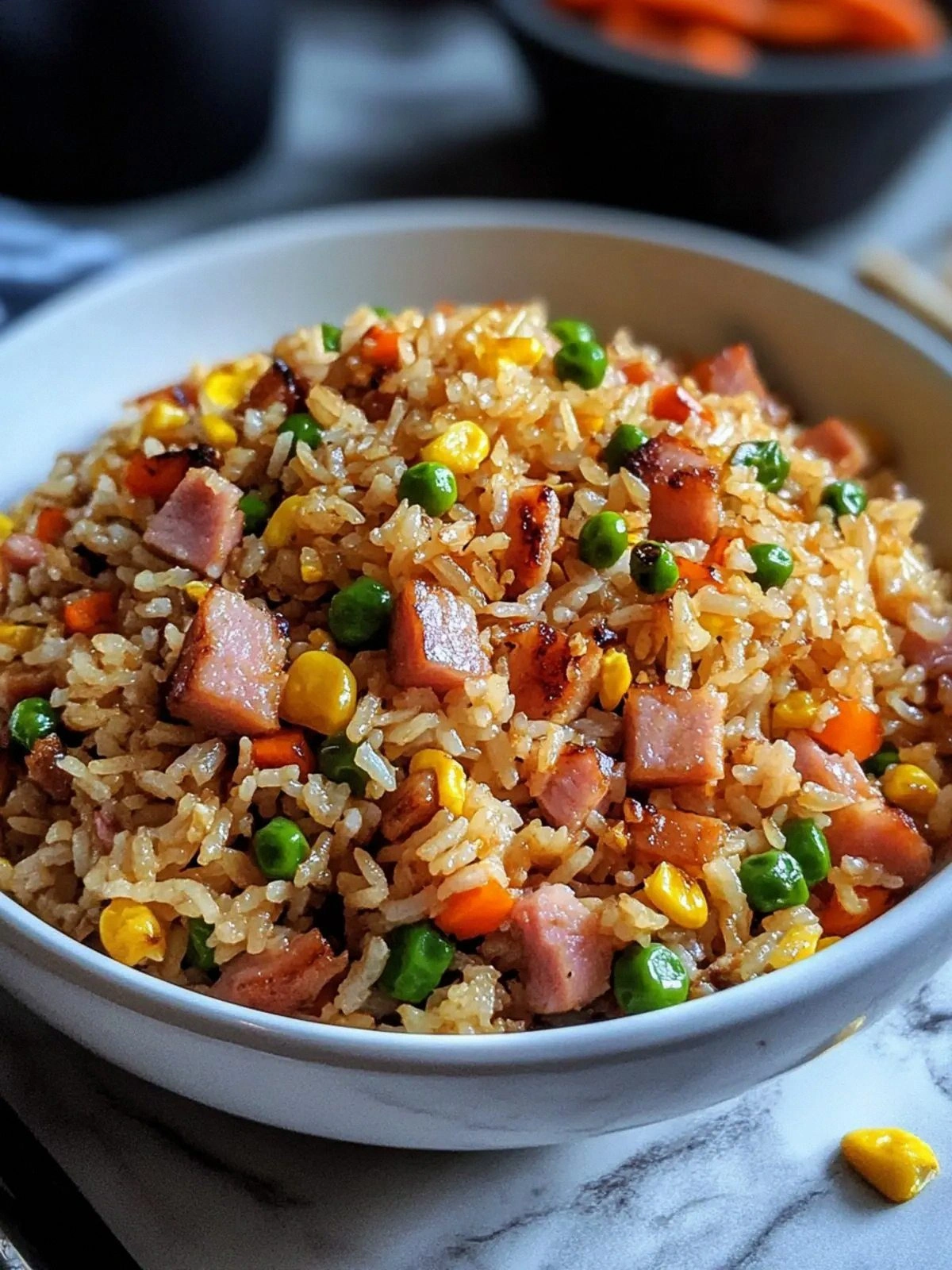 Section 5:
 The Method — Step by Step
Then- with 10 steps.
We'll write each step paragraph 4-6 sentences. We'll also insert boxes after step 3, step 6, step 8 maybe.
Let's craft steps.
Step 1: Heat pan.
Step 2: Add olive oil and ham.
Step 3: Brown ham, add onions.
Step 4: Add garlic and bell pepper.
Step 5: Add rice.
Step 6: Season with soy sauce.
Step 7: Push rice to side, scramble eggs.
Step 8: Mix eggs with rice.
Step 9: Finish seasoning.
Step 10: Serve.
We need to include boxes after step 3, step 6, step 8 maybe.
Let's write.
Kitchen Hack: While the onions cook, pre‑measure the eggs so you can whisk them quickly when the rice is ready. This small step keeps the flow of the recipe uninterrupted and ensures the eggs stay fluffy.Watch Out: When adding the eggs, watch the heat carefully. If the pan is too hot, the eggs will scramble into small bits; if too cool, they will stay liquid. The key is to lower the heat slightly and stir gently to create soft, even curds.Kitchen Hack: Keep a small bowl of water nearby during the final stir. A splash of water can prevent the rice from drying out and keep the grains fluffy. This trick is especially useful when reheating the dish later.That's it — you did it. But hold on, I've got a few more tricks that'll take this to another level...
Section 6:Insider Tricks for Flawless Results
We'll write 6headings.
The Temperature Rule Nobody Follows
etc. Let's write.The Temperature Rule Nobody Follows
Many cooks think high heat is always better, but for fried rice, a medium‑high setting is optimal. Too high and the rice will burn; too low and the flavors won't develop. Keep the heat steady by using a heavy‑bottom skillet that distributes heat evenly. If your stove has hot spots, rotate the pan occasionally to avoid uneven cooking.
Why Your Nose Knows Best
Your sense of smell is a powerful guide to seasoning. As the rice cooks, the aroma will change from raw to toasted. When the scent turns nutty, it's time to add soy sauce. This sensory checkpoint ensures you don't over‑season or under‑season the dish.
The 5‑Minute Rest That Changes Everything
After the final stir, let the rice sit in the pan for 5 minutes with the heat off. This brief rest allows the steam to finish cooking the grains and lets the flavors meld. The result is a more cohesive dish that tastes like it was made in a high‑end kitchen. Skipping this step leaves the rice feeling raw.
Use a Splatter Guard to Keep Clean
The oil splattering from the ham can make the kitchen a mess. A splatter guard or a lid with a vent keeps the oil contained while still allowing steam to escape. This simple device saves you from scrubbing pans later and keeps the cooking area tidy.
Keep the Rice Cold Until Cooking
Cold rice resists clumping and creates the perfect texture for fried rice. If you cook rice fresh, let it cool completely before using it in the pan. If you’re short on time, use leftover rice from the fridge. The cold grains absorb flavors better and stay fluffy.
Finish with a Splash of Sesame Oil
A few drops of toasted sesame oil added at the end gives the dish a nutty aroma and a glossy finish. It also rounds out the savory profile, balancing the saltiness of the soy sauce. Use only a teaspoon; the flavor is potent and can dominate if over‑used.
Section 7:Kitchen Hack: If you want to add a touch of sweetness, stir in a teaspoon of honey or brown sugar right before adding soy sauce. The caramelization will enhance the overall flavor without overpowering the savory elements.Creative Twists and Variations
Paragraph: "This recipe is a playground. Here are some of my favorite ways to switch things up:"This recipe is a playground. Here are some of my favorite ways to switch things up:
Seafood Surprise
Swap the ham for shrimp or scallops for a maritime twist. The seafood should be sautéed until pink before adding the rice, ensuring they stay tender. The briny flavor pairs beautifully with the soy sauce and garlic. This version is perfect for a quick seafood dinner.
Veggie‑Only Edition
Omit the ham entirely and add extra veggies like broccoli, carrots, or snow peas. Use a splash of vegetable broth to keep the rice moist. This plant‑based take still delivers a satisfying crunch and a depth of flavor from the aromatics.
Spicy Szechuan
Add a tablespoon of Szechuan peppercorns and a dash of chili oil for heat. The peppercorns give a numbing spiciness that contrasts with the sweetness of the ham. The chili oil adds a smoky undertone, turning the dish into a fiery delight.
Cheesy Delight
Stir in shredded cheddar or mozzarella after the rice has finished cooking. The cheese will melt into the hot mixture, creating a gooey, indulgent texture. This variation is a hit with kids who love cheesy meals.
Breakfast Bowl
Serve the fried rice with a fried or poached egg on top for a hearty breakfast. The yolk adds richness and the runny center provides a silky contrast. Pair it with a side of fresh fruit for a balanced morning meal.
Gluten‑Free Swap
Use tamari instead of soy sauce to keep the dish gluten‑free. The flavor profile remains similar, with a slightly richer umami. This version is ideal for those with celiac disease or gluten sensitivity.
Section 8:Storing and Bringing It Back to Life
Fridge Storage
Store the fried rice in an airtight container in the refrigerator for up to 3 days. The flavors continue to develop, making the dish taste even better the next day. When ready to eat, let it sit at room temperature for 10 minutes before reheating.
Freezer Friendly
For longer storage, place the fried rice in a freezer‑safe bag and freeze for up to 2 months. Make sure to press out as much air as possible to prevent freezer burn. Thaw overnight in the refrigerator before reheating.
Best Reheating Method
Reheat in a skillet over medium heat, adding a splash of water or broth to keep the rice moist. Stir frequently until the rice is hot throughout. The water splash trick mentioned earlier helps revive the texture, keeping the grains fluffy rather than dry.
Section 9: Recipe card. We need to include the card HTML. We need to adjust the ingredient list inside the card. We'll replace placeholder items. Let's construct the ingredient list. We need to create two columns: left column 5 items, right column 5 items. Left column: - 1 cup diced ham - 2 cups cooked rice - 1 tbsp olive oil - 1 medium onion, chopped - 2 cloves garlic, minced Right column: - 1 medium bell pepper, diced - 2 large eggs, beaten - 1 tbsp soy sauce - Salt to taste - Pepper to taste Now we need to add
after some steps. Section 6: Insider Tricks for Flawless Results: 5-6 tips withheadings. We'll write each tip 3-5 sentences. Include a Kitchen Hack box for top tip. Section 7: Creative Twists and Variations: 5-6 variations each with
headings. We'll write each 3-4 sentences. Start with "This recipe is a playground. Here are some of my favorite ways to switch things up:". Section 8: Storing and Bringing It Back to Life: 3 subsections with
. We'll write 3 paragraphs. Include the water splash trick. Section 9: Recipe card. Then hidden elements. We also need to include the Pinterest description hidden element after season. We need to ensure the entire output is raw HTML with no markdown. Let's write. We'll need to keep track of word count. We'll aim for 3500 words. We'll write many paragraphs. We'll also need to ensure we don't accidentally use any emojis. We'll avoid them. Let's start. We'll write introduction paragraph 1: 5 sentences. Paragraph 1: "I was standing in a kitchen that smelled like burnt toast and regret when I realized I had no idea how to salvage my overcooked rice." etc. We'll write 5 sentences. Paragraph 2: 5 sentences. Paragraph 3: 5 sentences. Paragraph 4: 5 sentences. Then section 2: bullet points. We'll use
- with
- .
We'll include a Kitchen Hack box after bullet list.
Section 3: inside ingredient list with groups. We'll write 4 groups each with
- each starting with Keyword: etc. We'll write 6 bullet points. After that, insert a Kitchen Hack box.
Section 3: Inside the Ingredient List: 3-4 groups with
- . Each li must have a paragraph of 4-6 sentences. We'll produce short but still 4-6 sentences. We'll keep them.
Also we need to adjust the recipe card's quick stats row: Prep 15 min, Cook 30 min, Total 45 min, Serves 4. We'll keep those.
We need to adjust the nutrition bar: Cal 293, Protein 25g, Carbs 30g, Fat 15g. We'll keep those.
Also we need to adjust the recipe card's header image alt text: "Ultimate Diced Ham Fried Rice". Already included.
We need to ensure the script for adjustServings uses data-default-servings. We set data-default-servings="4".
We need to ensure the ingredient list uses data-base-qty correctly. For salt and pepper, we set 0.
Also we need to ensure the recipe card's ingredient list uses for each quantity. We'll set the numbers.
We need to ensure the card's directions list uses