Love this? Pin it for later! 📌
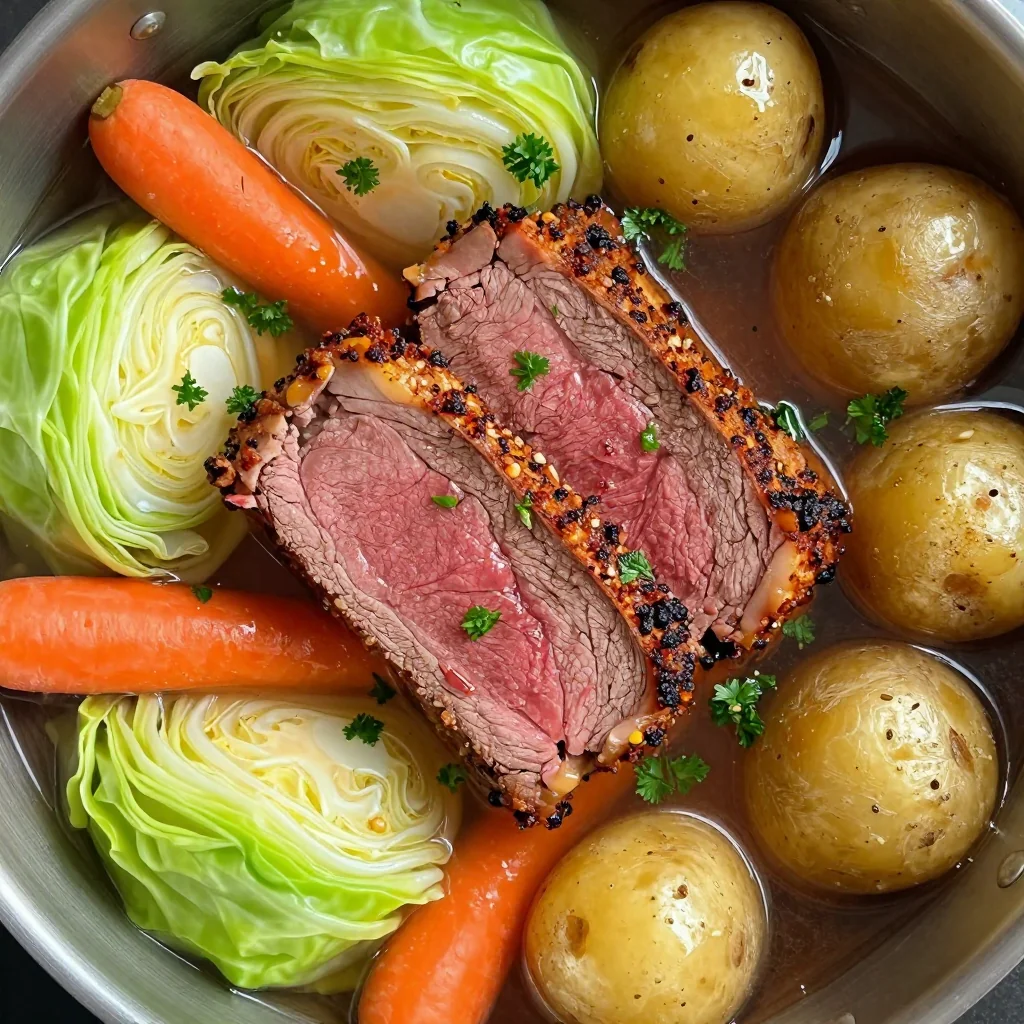
Ring in the New Year with the most tender, melt-in-your-mouth corned beef and perfectly seasoned vegetables—all made effortlessly in your slow cooker while you celebrate!
Every New Year's Eve, my grandmother would start her famous corned beef at dawn. The aroma would drift through the house like a promise of good fortune, and by the time the ball dropped, we'd be gathered around a table groaning under the weight of her legendary feast. Years later, when I inherited her slow cooker (a vintage gem from the 1970s), I discovered her secret: low, slow heat and a whisper of brown sugar to balance the salt. This recipe captures that same magic with a fraction of the effort—no 4 a.m. wake-up call required!
What makes this version special is how the slow cooker transforms tough brisket into buttery-soft slices while infusing every vegetable with the rich, complex flavors of the cooking liquid. The cabbage becomes silky rather than mushy, the carrots retain a gentle bite, and the potatoes absorb all those incredible juices. It's comfort food that tastes like prosperity itself—exactly what you want to welcome a brand new year.
Why This Recipe Works
- Set-and-forget convenience: Prep takes 20 minutes, then your slow cooker does all the work while you celebrate
- Guaranteed tender results: The low, slow cooking breaks down tough connective tissue for fork-tender beef every time
- Perfectly seasoned vegetables: Adding veggies at different times ensures each is cooked to ideal doneness
- Make-ahead friendly: Tastes even better the next day—ideal for New Year's Day leftovers
- Feed a crowd: One 3-4 pound brisket easily serves 8-10 hungry guests
- Minimal cleanup: Everything cooks in one pot—less time washing dishes, more time celebrating
Ingredients You'll Need
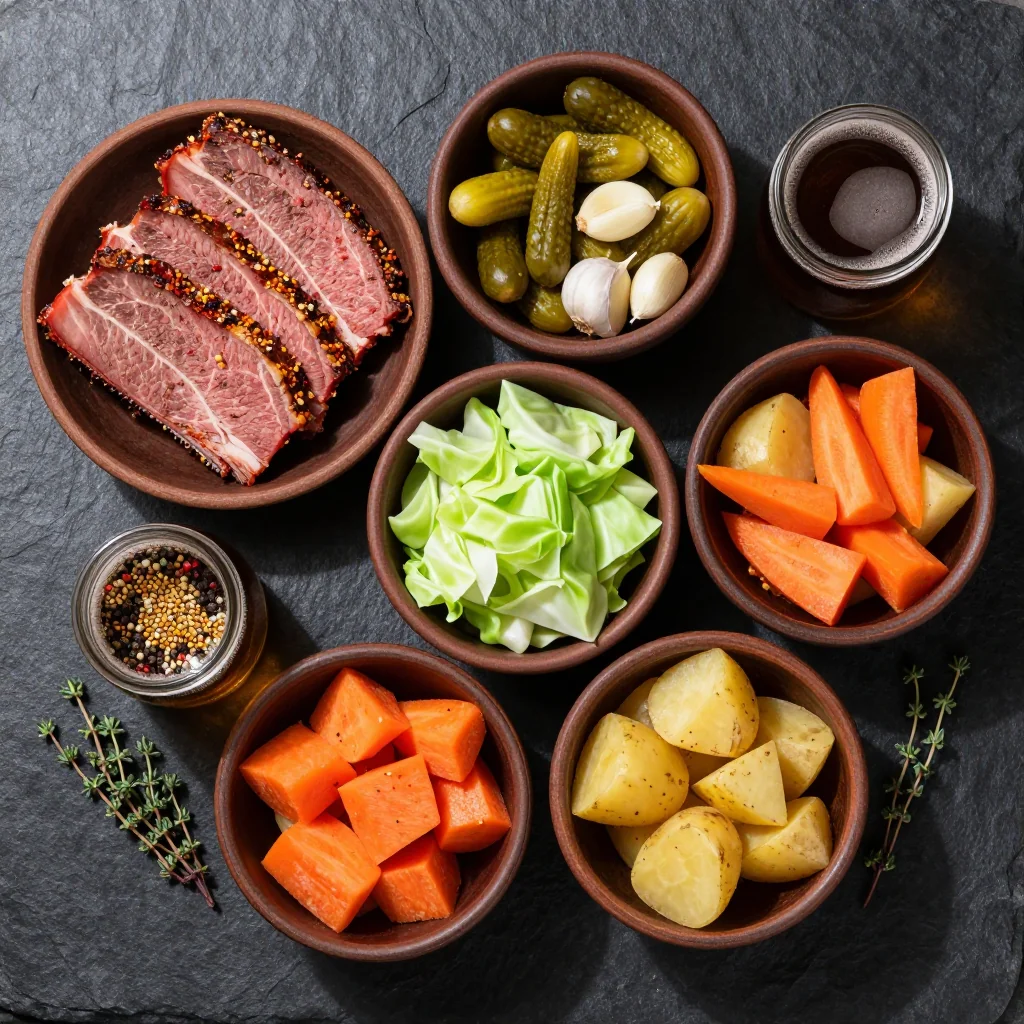
The beauty of this recipe lies in its simplicity—just a handful of quality ingredients that transform into something magical. Let's break down each component so you can shop like a pro:
The Star: Corned Beef Brisket
Look for a flat-cut brisket (sometimes labeled "first cut") for uniform slices. The point cut has more fat and is better for shredding. Most come with a spice packet—keep it! We'll use it plus a few extras. A 3-4 pound brisket feeds 8-10 people generously, with leftovers for incredible sandwiches.
The Flavor Builders
Beer: A dark stout or porter adds incredible depth. The malty sweetness balances the saltiness of the beef. Non-alcoholic works perfectly too—just avoid hoppy beers which can turn bitter during long cooking.
Beef broth: Low-sodium is crucial since the brisket is already quite salty. Homemade is divine if you have it.
Brown sugar: Just two tablespoons transform the cooking liquid into a glossy glaze that counters the salt and enhances the natural sweetness of the vegetables.
The Aromatic Vegetables
Onion: One large yellow onion, quartered but not peeled—the skin adds gorgeous color to the cooking liquid.
Garlic: A whole head, top sliced off to expose the cloves. It becomes sweet and spreadable, perfect for crusty bread.
Carrots: Thick-cut coins hold their shape better than baby carrots. Look for rainbow carrots for a stunning presentation.
The Finishing Vegetables
Red potatoes: Their waxy texture prevents them from falling apart. Baby potatoes can go in whole; larger ones should be halved.
Green cabbage: A small head, cut into 6 wedges with the core attached to prevent falling apart during cooking.
How to Make Slow Cooker Corned Beef and Cabbage for New Year's Dinner
Prepare the brisket foundation
Remove the corned beef from packaging and rinse thoroughly under cold water to remove excess surface salt. Pat completely dry with paper towels. This crucial step prevents an overly salty final dish. Place the brisket fat-side up in your slow cooker—this allows the fat to baste the meat as it renders. If your brisket came with a spice packet, sprinkle it evenly over the top. If not, create your own blend with 1 tablespoon black peppercorns, 1 teaspoon mustard seeds, 8 whole allspice berries, 2 bay leaves, and ½ teaspoon whole cloves.
Build the flavor base
Pour the beer and beef broth around (not over) the brisket. Add the brown sugar, stirring gently to dissolve. Quarter the onion but leave the skin on—it adds a beautiful amber color to the cooking liquid. Slice the top off the entire head of garlic to expose the cloves, then nestle it cut-side down in the liquid. Add the bay leaves, peppercorns, and any additional spices. The liquid should come about halfway up the side of the brisket; add more broth if needed.
Start the slow cooking magic
Cover and cook on LOW for 9-10 hours or HIGH for 5-6 hours. The key is patience—don't lift the lid during the first 6 hours of cooking. This allows the temperature to remain consistent and the connective tissue to break down properly. The brisket is done when it reaches an internal temperature of 195°F and a fork slides in with almost no resistance. If you have a programmable slow cooker, set it to LOW and walk away—this is perfect for overnight cooking on New Year's Eve.
Add the first round of vegetables
After the initial 6 hours on LOW (or 3 hours on HIGH), it's time to add the vegetables that need longer cooking. Scatter the carrot coins around the brisket, tucking them into the liquid. Add the potatoes, cut-side down if halved. These will cook for the remaining time and absorb the incredible flavors from the broth. Replace the lid quickly to maintain temperature.
Prepare the cabbage
Cut the cabbage into 6 wedges, leaving the core attached to each wedge—this prevents the cabbage from falling apart during cooking. The size is important: too small and they'll disappear into the liquid; too large and they won't cook through. When you have about 1 hour remaining on LOW (30 minutes on HIGH), carefully place the cabbage wedges on top of everything, spooning a little cooking liquid over each piece. Don't stir—just let them steam on top.
Check for doneness
After the full cooking time, test the brisket by inserting a fork into the thickest part—it should slide in with almost no resistance. The internal temperature should read 195-200°F. If it's not quite there, continue cooking on LOW for another 30-60 minutes. The vegetables should be tender but not mushy. The cabbage should be silky and bright green, not gray and overcooked.
Rest and slice
This is crucial: remove the brisket to a cutting board and tent loosely with foil. Let it rest for 15-20 minutes before slicing. This allows the juices to redistribute, ensuring every slice is moist and flavorful. Slice against the grain into ¼-inch thick pieces. If you slice with the grain, the meat will be stringy and tough despite the long cooking time.
Serve and enjoy
Arrange the sliced corned beef on a large platter, surrounding it with the vegetables. Ladle some of the cooking liquid over everything for shine and flavor. Don't forget the roasted garlic—squeeze the cloves out onto crusty bread or mix into the cooking liquid for an incredible sauce. Garnish with fresh parsley for color. Serve with whole grain mustard, horseradish sauce, and plenty of Irish soda bread to soak up the delicious juices.
Expert Tips
Don't skip the rinse
That corned beef is packed in salt brine. A thorough rinse removes excess surface salt, preventing an overly salty final dish. Pat completely dry for better browning and flavor development.
Check internal temperature
For fork-tender results, cook to 195-200°F. Any lower and it'll be tough; any higher and it becomes mushy. An instant-read thermometer is your best friend here.
Make it overnight
Start it on LOW before bed on New Year's Eve. Add vegetables in the morning, and it'll be ready for an early dinner. Perfect for hosting without kitchen stress.
Save the liquid gold
Strain and refrigerate the cooking liquid. Use it as a base for incredible soup, to cook cabbage for colcannon, or to braise other vegetables. It freezes beautifully for months.
Prep vegetables ahead
Cut vegetables the night before and store in separate containers with damp paper towels. This makes the morning addition super quick and prevents any temperature loss.
Slice against the grain
Look for the lines running through the meat and slice perpendicular to them. This shortens the muscle fibers, ensuring every bite is tender rather than stringy.
Variations to Try
Stout-free version
Replace the beer with 2 cups apple cider and 1 cup additional beef broth. Add 1 tablespoon apple cider vinegar for brightness. The cider adds a subtle sweetness that pairs beautifully with the savory beef.
Spicy kick
Add 1 teaspoon crushed red pepper flakes, 2 sliced jalapeños, and a tablespoon of prepared horseradish to the cooking liquid. Serve with a horseradish cream sauce for extra zing.
Root vegetable medley
Swap half the potatoes for parsnips, turnips, and sweet potatoes. Cut them into similar sizes for even cooking. The natural sweetness creates an incredible balance with the salty beef.
Herb garden
Add a bouquet garni of fresh thyme, rosemary, and sage. Tuck in a few sprigs of fresh dill with the cabbage for a bright, spring-like flavor that lightens the rich dish.
Storage Tips
Refrigerator Storage
Store leftover corned beef in the cooking liquid to keep it moist. Place in an airtight container and refrigerate within 2 hours of cooking. It will keep for up to 4 days, but the flavor actually improves after the first day as the seasonings meld. Store vegetables separately to prevent them from becoming overly salty.
Pro tip: Slice only what you'll serve immediately. Store the remaining brisket whole, then slice when cold—it slices much cleaner and reheats better than pre-sliced meat.
Freezer Instructions
Corned beef freezes beautifully for up to 3 months. Wrap individual portions tightly in plastic wrap, then foil, then place in freezer bags. Include some cooking liquid in each portion to prevent drying. Thaw overnight in the refrigerator and reheat gently in the liquid.
Vegetables don't freeze as well—they become mushy when thawed. Consider freezing just the meat and making fresh vegetables when you reheat.
Reheating Perfection
For best results, reheat in a covered dish with some cooking liquid at 325°F until just warmed through (about 20 minutes for a whole piece, 10 minutes for slices). Avoid the microwave—it dries out the meat and makes it tough. If you must microwave, do it in 30-second intervals with plenty of liquid.
Leftover corned beef makes incredible sandwiches, hash, or soup. Try it chopped and mixed into scrambled eggs with some of the cooking liquid for the most decadent breakfast.
Frequently Asked Questions
While you can cook on HIGH for 5-6 hours, the results won't be as tender and flavorful. The low, slow cooking is what breaks down the tough connective tissue in the brisket. If you're short on time, consider using a smaller 2-3 pound brisket instead of rushing the cooking process.
Tough corned beef is usually caused by either not cooking long enough or not cooking to a high enough internal temperature. The collagen needs to reach 195-200°F to properly break down. Also, slicing against the grain is crucial—look for the lines running through the meat and slice perpendicular to them.
Adding all vegetables at the start will result in very mushy, overcooked vegetables by the time the meat is done. The staggered timing ensures each vegetable is perfectly cooked: carrots and potatoes after 6 hours, cabbage in the final hour. This maintains their texture and color.
You can cut the brisket in half and stack the pieces, or curl it around the sides of the cooker. The meat will shrink as it cooks, so even if it's snug at first, it'll fit better after a few hours. Just ensure the lid can close properly to maintain temperature.
The spice packet adds traditional flavor, but you can create your own blend with 1 tablespoon black peppercorns, 1 teaspoon mustard seeds, 8 whole allspice berries, 2 bay leaves, and ½ teaspoon whole cloves. Some people prefer to skip the packet entirely and season simply with bay leaves and peppercorns for a cleaner flavor.
Corned beef is specifically brisket that's been cured in a salt brine. Regular brisket won't have the same flavor profile. If you can't find corned beef, you can make your own by brining brisket for 5-7 days, but for this recipe, it's best to find pre-corned beef. Some butchers will corn beef for you if you ask in advance.
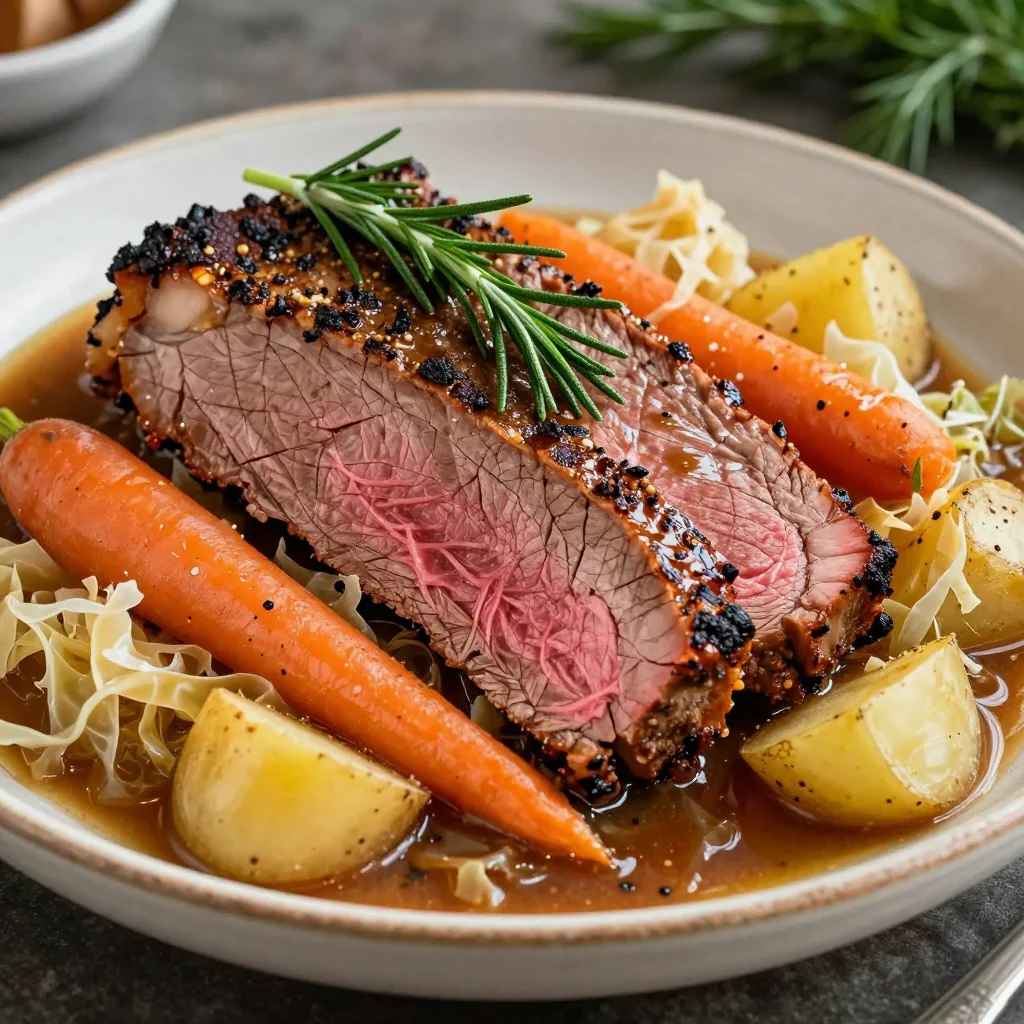
Slow Cooker Corned Beef and Cabbage for New Year's Dinner
Ingredients
Instructions
- Rinse and prep: Rinse corned beef under cold water and pat dry. Place fat-side up in slow cooker. Sprinkle with spice packet contents.
- Add liquid: Pour beer and beef broth around brisket. Stir in brown sugar to dissolve. Add onion quarters, garlic head (cut-side down), bay leaves, and peppercorns.
- Slow cook: Cover and cook on LOW for 9-10 hours (or HIGH for 5-6 hours) until fork-tender and internal temperature reaches 195°F.
- Add vegetables: After 6 hours on LOW (or 3 hours on HIGH), add carrots and potatoes. Replace lid quickly.
- Final addition: With 1 hour remaining on LOW (30 minutes on HIGH), add cabbage wedges on top, spooning liquid over them.
- Rest and serve: Remove brisket to cutting board, tent with foil, and rest 15-20 minutes. Slice against the grain and serve with vegetables.
Recipe Notes
For best results, don't skip the resting period after cooking. This allows the juices to redistribute, ensuring every slice is moist and flavorful. Store leftovers in the cooking liquid to prevent drying out.