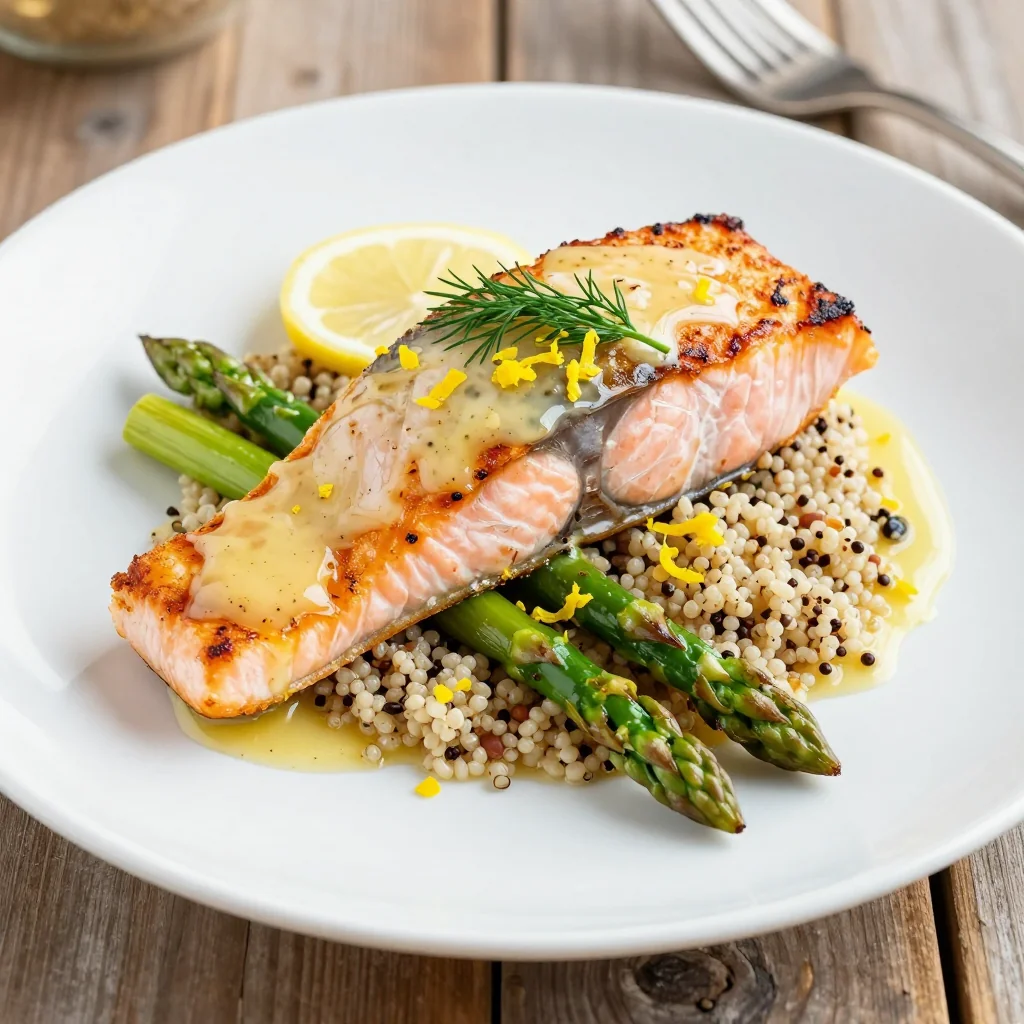
Love this? Pin it for later! 📌
Why This Recipe Works
- Marinade Magic: A 15-minute bath in lemon, dill, and a kiss of maple lets the omega-3-rich salmon absorb flavor without masking its natural sweetness.
- Clean & Quick: No refined sugar, no dairy, no gluten—just whole-food ingredients that grill in under 10 minutes.
- Two-zone Grilling: Sear over direct heat, finish over indirect for flaky centers and lacquered edges every single time.
- Meal-Prep Hero: Flake leftovers onto salads, grain bowls, or tucked into lettuce wraps for up to four days.
- Restaurant Presentation: Charred lemon halves and a shower of fresh dill make plated salmon look like it came off a chef’s pass.
- Flexible Fish: Works with salmon, arctic char, trout, or even thick halibut steaks—same timing, new personality.
Ingredients You'll Need
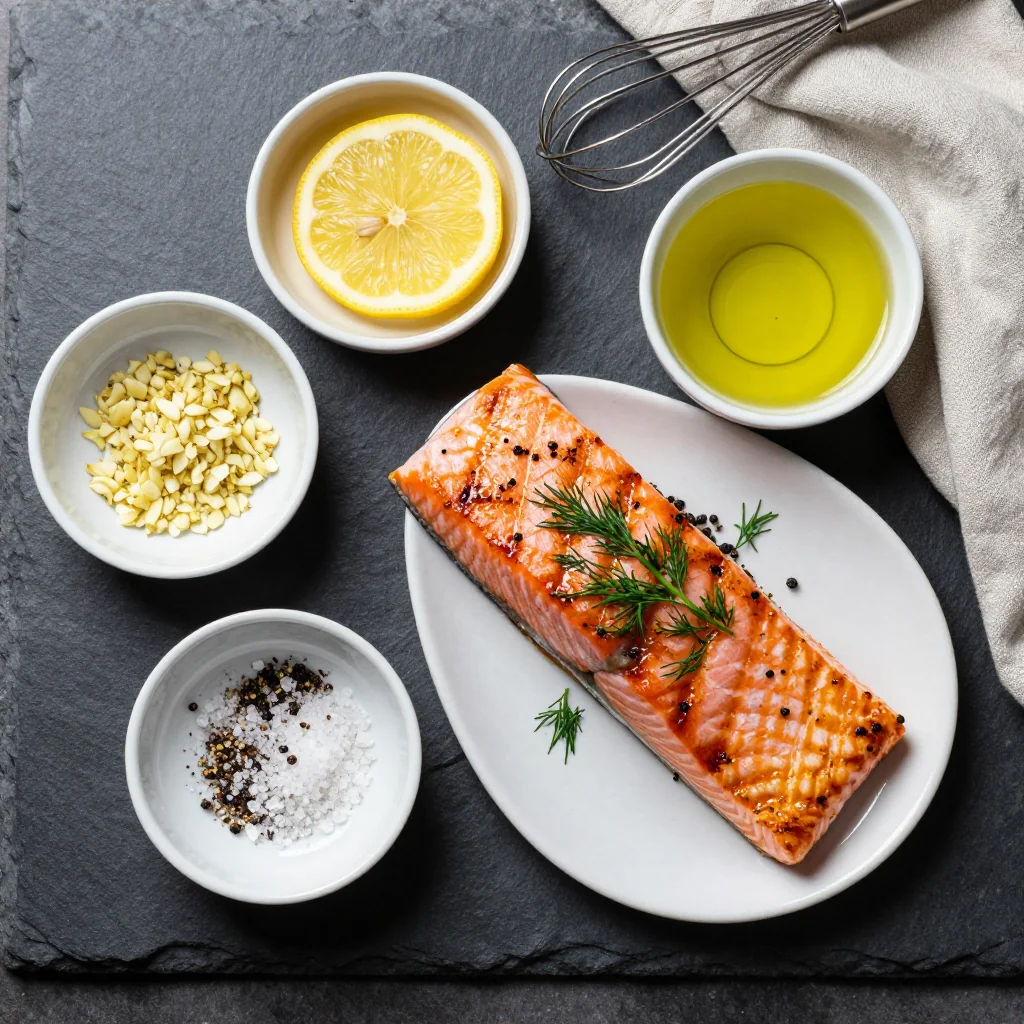
Great salmon starts at the seafood counter. Look for fillets that smell like the ocean, not “fishy,” with firm flesh that springs back when pressed. Wild Alaskan sockeye or coho are my go-to for color and sustainability; if farmed Atlantic is what’s available, opt for responsibly raised, ASC-certified. Aim for uniform 1¼-inch thickness so every bite cooks evenly.
Fresh dill: Feather-y and fragrant, dill fronds deliver grassy notes that pair naturally with citrus. Buy a living herb pot if you can; it keeps on the windowsill for weeks and you’ll find yourself adding dill to scrambled eggs, Greek yogurt, and roasted potatoes.
Lemon: One for zest, one for juice, plus two more to halve and char on the grill—those caramelized edges become a smoky squeeze of sunshine over the finished plate. Choose thin-skinned, heavy lemons; they’re juicier and release more aromatic oils.
Extra-virgin olive oil: A high-quality, buttery oil protects the fish from sticking and carries fat-soluble flavor compounds into the flesh. California Ranch or an early-harvest Greek oil add grassy depth without overpowering.
Pure maple syrup: Just a teaspoon encourages browning and balances the lemon’s tang. Grade A amber dissolves instantly and keeps the recipe refined-sugar-free.
Garlic: One small grated clove disappears into the marinade but leaves behind a gentle savory backbone.
Sea salt & freshly ground pepper: Season from a height so the crystals distribute evenly; the salt draws moisture out initially, then back in—flavoring the fish from the inside out.
Optional heat: A pinch of red-pepper flakes or a drizzle of sriravai (a fermented chili-honey sauce) wakes up the palate without derailing clean eating.
How to Make Clean Eating Lemon and Dill Grilled Salmon
Make the marinade
In a small bowl whisk together the zest of 1 lemon, 3 Tbsp juice (about 1 lemon), 2 Tbsp chopped fresh dill, 1½ Tbsp olive oil, 1 tsp maple syrup, 1 grated garlic clove, ½ tsp sea salt, ¼ tsp black pepper, and optional chili. The mixture should look like a loose pesto and smell like summer in the French countryside.
Prep the salmon
Pat 2 lb of salmon fillet very dry with paper towels—moisture is the enemy of browning. If your salmon still has pin-bones, run fingertips across the flesh; use needle-nose pliers to pull them out in the direction they’re angled. Leave the skin on; it acts as a heat shield and crisps into salmon bacon.
Marinate, don’t macerate
Place salmon skin-side up in a shallow glass dish. Spoon two-thirds of the marinade over the flesh, turning to coat evenly. Cover and refrigerate 15–30 minutes. Longer than 45 minutes and the acid will begin to cure the edges, giving them a opaque, ceviche-like appearance.
Preheat the grill
Clean grates thoroughly, then oil them with a lightly oiled paper towel. Create two zones: high heat (450 °F) on the left two burners, medium (350 °F) on the right. For charcoal, pile coals on one side. Close lid for 10 minutes so heat stabilizes.
Oil & lay the fish
Remove salmon from marinade, letting excess drip off. Brush flesh lightly with oil to encourage caramelization. Place salmon skin-side down over direct heat at a 45° angle to the grates; this prevents sticking and gives pro-level crosshatch marks.
Sear & slide
Cover and cook 3 minutes. Using a thin metal spatula, rotate fish 90° (do not flip) for diamond grill marks. After another 2 minutes, slide the salmon—still skin-side down—onto the cooler zone. Add halved lemons cut-side down to the hot zone.
Finish gently
Close lid and continue cooking 4–6 minutes more, basting once with reserved marinade. Salmon is done when it flakes but still looks slightly translucent in the very center (it will carry-over cook). Target internal temp 125 °F for medium-rare or 135 °F for medium.
Rest & serve
Transfer to a platter, tent loosely with foil, rest 5 minutes. Squeeze charred lemon over top, sprinkle remaining dill, drizzle with a glug of fresh olive oil. Serve whole for a dramatic tableside presentation or break into generous flakes over grilled vegetables.
Expert Tips
Thermometer beats timer
Every fillet has a different starting thickness. An instant-read thermometer is the sure-fire way to avoid the dreaded dry salmon.
Skin = built-in barrier
Even if you don’t plan to eat the skin, leave it on during grilling; it protects the delicate flesh and crisps into an irresistible snack.
Basting brush hack
Use a fresh rosemary sprig as a basting brush; the heat releases herb oils and adds another layer of flavor.
Cedar plank option
Soak an untreated cedar plank for 1 hour, then cook salmon entirely on the plank for subtle smoky notes and zero sticking risk.
Flash freeze for 15 min
If your salmon is ultra-fresh and still slightly limp, a quick stint in the freezer firms the flesh, making it easier to maneuver on the grill.
Don’t skip the rest
Resting allows juices to redistribute, yielding moist, glossy flakes instead of a puddle of liquid on the cutting board.
Variations to Try
- Mediterranean Twist: Swap dill for oregano and mint, add ¼ tsp smoked paprika, serve with cherry-tomato olive relish.
- Asian-Infused: Sub lime for lemon, add 1 tsp grated ginger & 1 tsp sesame oil; garnish with toasted sesame seeds and scallions.
- Spicy Cajun: Add ½ tsp cayenne, 1 tsp thyme, and 1 tsp smoked paprika; serve over grilled okra and zucchini.
- Coconut Curry: Replace olive oil with 2 Tbsp coconut milk, add ½ tsp turmeric and ¼ tsp coriander; finish with fresh cilantro.
Storage Tips
Refrigerate: Cool salmon completely, transfer to an airtight container, refrigerate up to 4 days. For best texture, reheat gently at 275 °F for 8–10 minutes or enjoy cold.
Freeze: Portion into meal-size pieces, wrap tightly in parchment then foil, place in freezer-safe bag. Freeze up to 2 months. Thaw overnight in the fridge.
Make-Ahead: Marinade can be blended up to 5 days ahead and stored in the fridge. You can also prep vegetables and lemon halves the morning of your cookout; store covered in the fridge.
Frequently Asked Questions
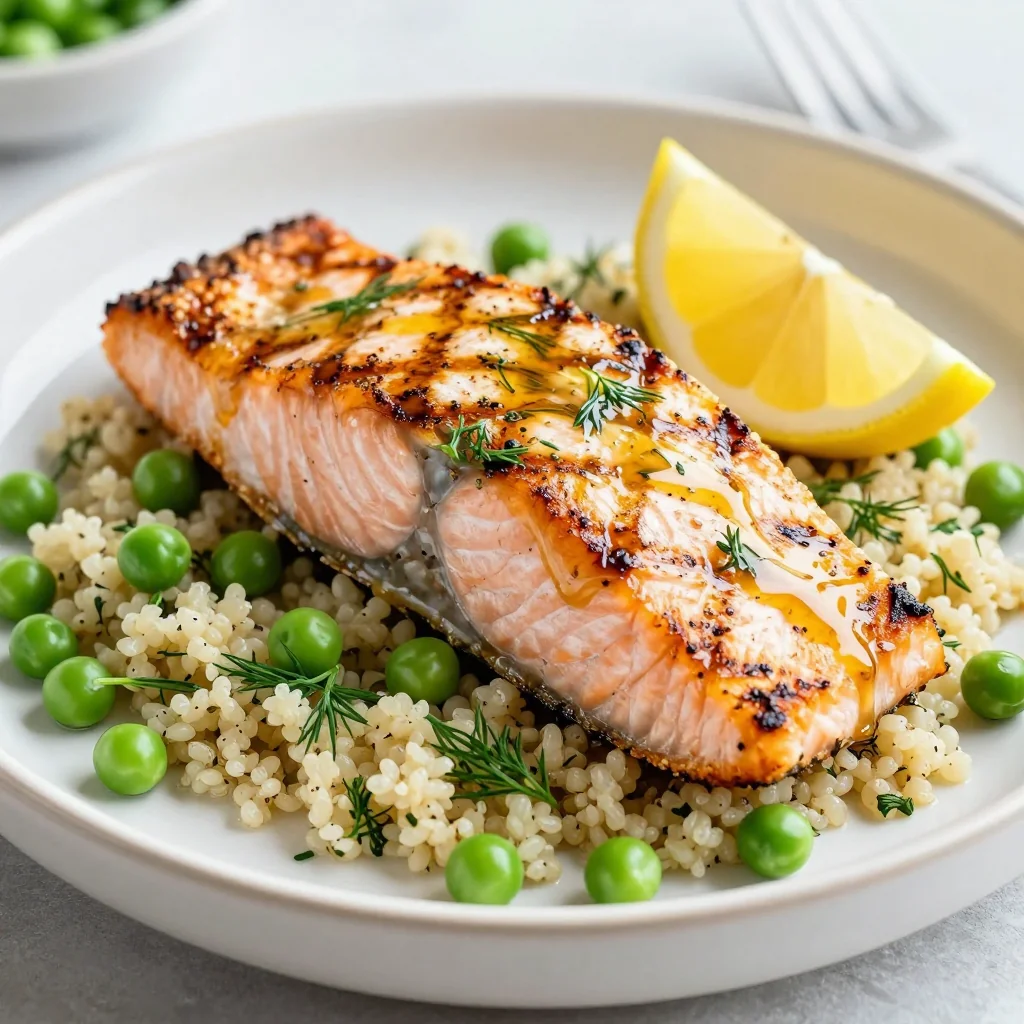
Clean Eating Lemon and Dill Grilled Salmon
Ingredients
Instructions
- Marinade: Zest 1 lemon into a bowl. Add 3 Tbsp juice, 2 Tbsp dill, olive oil, maple syrup, garlic, salt, pepper, and chili. Whisk.
- Marinate: Place salmon skin-side up in dish; coat with two-thirds of marinade. Refrigerate 15–30 minutes.
- Preheat: Prepare grill for two-zone cooking (450 °F hot, 350 °F cool).
- Grill: Oil grates. Lay salmon skin-side down over direct heat at 45° angle. Sear 3 min, rotate 90°, cook 2 min more.
- Move: Slide salmon to cooler side; add lemon halves cut-side down on hot zone. Cover, cook 4–6 min to desired doneness (125 °F medium-rare).
- Rest: Transfer to platter, tent with foil 5 min. Squeeze charred lemons over top, sprinkle remaining dill, drizzle olive oil. Serve.
Recipe Notes
Cooking times vary with fillet thickness; an instant-read thermometer ensures perfect results every time.